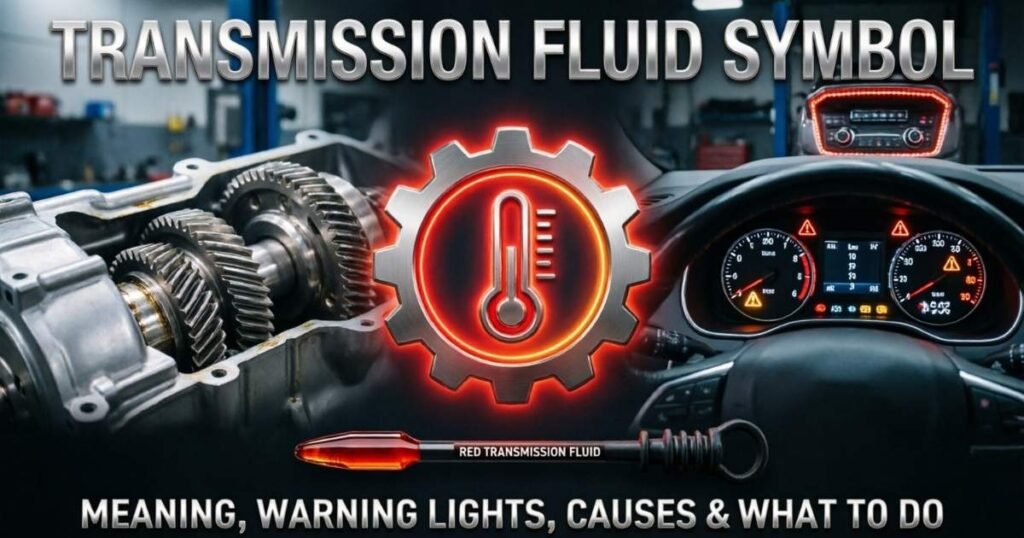

Seeing a Transmission Fluid Symbol on your dashboard can be stressful, especially when you don’t know what caused it or whether it’s safe to keep driving. You may also wonder about the transmission fluid cap symbol or transmission cap symbol. If you’re asking what is the symbol for transmission fluid, you’re in the right place for clear answers.
This guide explains the Transmission Fluid Symbol in simple, easy-to-follow language. You’ll learn what the symbol for transmission fluid means, why it appears, and what steps to take next. We’ll also cover fluid levels, warning signs, overheating, maintenance, and common causes so you can protect your transmission and avoid costly repairs.
What the Transmission Fluid Symbol Looks Like
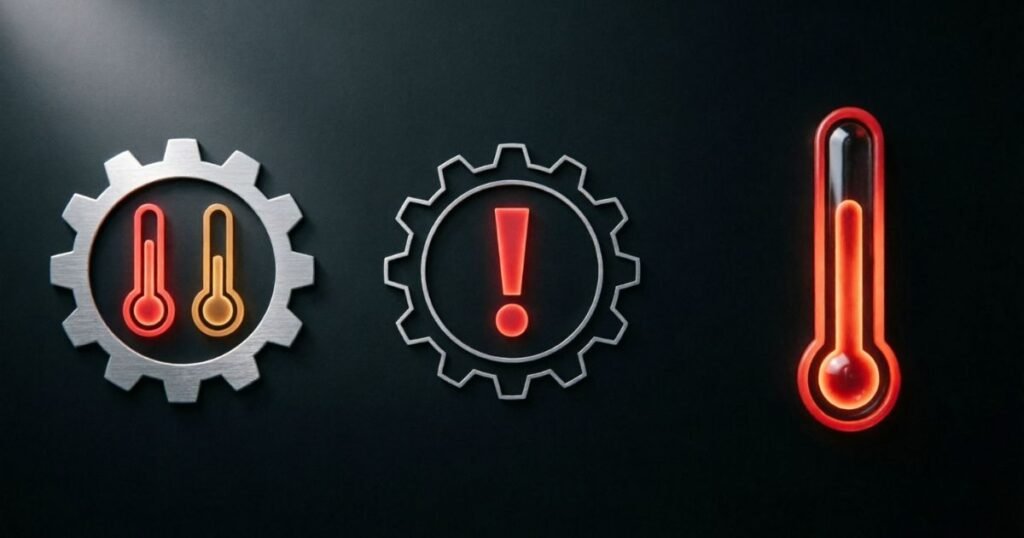
The Transmission Fluid Symbol can look different from one vehicle to another. It often appears as a gear with a thermometer inside. Some dashboards may show a gear, oil drop, or temperature icon. The symbol usually relates to the transmission system and its fluid temperature. Your vehicle manual can confirm the exact design and meaning for your car.
You may notice the symbol in red, amber, or yellow. A red warning usually suggests a more urgent problem. An amber light may indicate that the system needs attention soon. The transmission fluid warning light can appear when fluid becomes too hot, the level drops, or the transmission detects another issue that needs checking.
Before taking action, check your owner’s manual for the correct symbol. Dashboard designs vary between manufacturers and models. Some vehicles display a transmission dashboard symbol only when the transmission temperature rises. Others may use a warning message instead. Knowing the correct icon helps you respond quickly and avoid unnecessary transmission damage or expensive repairs.
Why This Symbol Appears
The symbole of Transmission Fluid may appear when your vehicle detects a transmission problem. High fluid temperature is a common cause. Low fluid, leaks, or old fluid can also trigger the warning. In some cases, a faulty sensor may send an incorrect signal. The warning gives you a chance to act before serious damage occurs.
Common reasons include:
- Low transmission fluid
- Transmission fluid leak
- Overheated transmission fluid
- Old or damaged fluid
- Faulty temperature sensor
- Heavy towing or driving
- Transmission cooling problems
If the symbol appears while driving, don’t ignore it. Check the vehicle manual and look for other signs. Burning smells, slipping gears, delayed shifting, or unusual noises may indicate a more serious transmission issue. When these symptoms appear together, professional inspection is often the safest choice.
How Transmission Fluid Works
Transmission fluid keeps the transmission system lubricated and helps its internal parts work smoothly. It also carries heat away from components and supports proper gear shifting.
In an automatic transmission, the fluid also creates hydraulic pressure. This pressure helps control gears, clutches, and other internal parts. Clean fluid supports smooth performance, while low or damaged fluid can cause slipping, overheating, and delayed shifting.
The interpretation may vary depending on the situation:
- Lubrication: Transmission fluid reduces friction between gears, bearings, and other moving parts.
- Cooling: It absorbs heat and carries it toward the transmission cooling system.
- Hydraulic pressure: Automatic transmissions use fluid pressure to control gear changes and clutches.
- Protection: Good fluid helps protect internal components from wear and deposits.
- Warning signs: Low fluid or overheated fluid can cause poor shifting, unusual noises, and transmission problems.
Read More ; Mandalorian Symbol: Meaning, Mythosaur Skull, History & Significance
Types of Transmission Systems and Symbol Behavior
Different transmission systems can display warning symbols in different ways. Automatic, manual, CVT, and dual-clutch transmissions may use different indicators for temperature, fluid problems, or system faults.
Modern vehicles use sensors to monitor transmission temperature, pressure, and performance. The dashboard warning depends on the vehicle’s design and the problem detected. The interpretation may vary depending on the situation:
- Automatic transmission: A warning may indicate high fluid temperature, low fluid, or a detected transmission fault.
- Manual transmission: Warning symbols may focus more on system faults because fluid checks and controls differ.
- CVT transmission: A temperature warning can appear when the transmission becomes too hot during demanding driving.
- Dual-clutch transmission: The warning may relate to clutch temperature, transmission pressure, or electronic controls.
- Vehicle-specific behavior: Always check the owner’s manual because symbol designs and warning meanings vary between manufacturers.
Common Signs Alongside the Symbol
When a transmission warning appears, your car may show other signs at the same time. These symptoms can provide useful clues about fluid condition, temperature, or possible transmission problems.
The interpretation may vary depending on the situation:
| Sign | What It May Indicate |
| Gear slipping | The transmission may struggle to maintain the selected gear. |
| Delayed shifting | Low fluid, pressure problems, or worn components may affect gear changes. |
| Burning smell | Overheated or burnt transmission fluid may produce a strong smell. |
| Unusual noise | Whining, grinding, or humming can point to internal transmission issues. |
| Fluid leak | Red, brown, or dark fluid under the vehicle may indicate a leak. |
| High temperature | Excessive heat can trigger a transmission temperature warning. |
| Poor acceleration | Transmission problems may reduce smooth power delivery and vehicle performance. |
What To Do After Seeing the Symbol
If the symbol Transmission Fluid appears, stay calm and check the dashboard for other warning lights. Slow down and avoid hard acceleration or heavy towing. Pay attention to burning smells, slipping gears, delayed shifting, or strange noises. If you notice serious symptoms, pull over safely and turn off the engine. Don’t continue driving unnecessarily.
Next, check your owner’s manual for specific instructions. You may need to check the transmission fluid level if your vehicle allows it. If the warning remains, contact a qualified technician. A professional can inspect fluid condition, temperature, leaks, sensors, and internal components. Acting early can help prevent expensive transmission repairs.
Checking Transmission Fluid Level
Checking the transmission fluid level can help you spot leaks, low fluid, or other problems before they cause serious transmission damage.
- Park the vehicle on a level surface.
- Check your owner’s manual first.
- Warm the transmission if required.
- Locate the transmission dipstick.
- Remove and wipe the dipstick clean.
- Reinsert it and check the fluid level.
- Add the correct fluid only when needed.
Transmission Fluid Color Guide
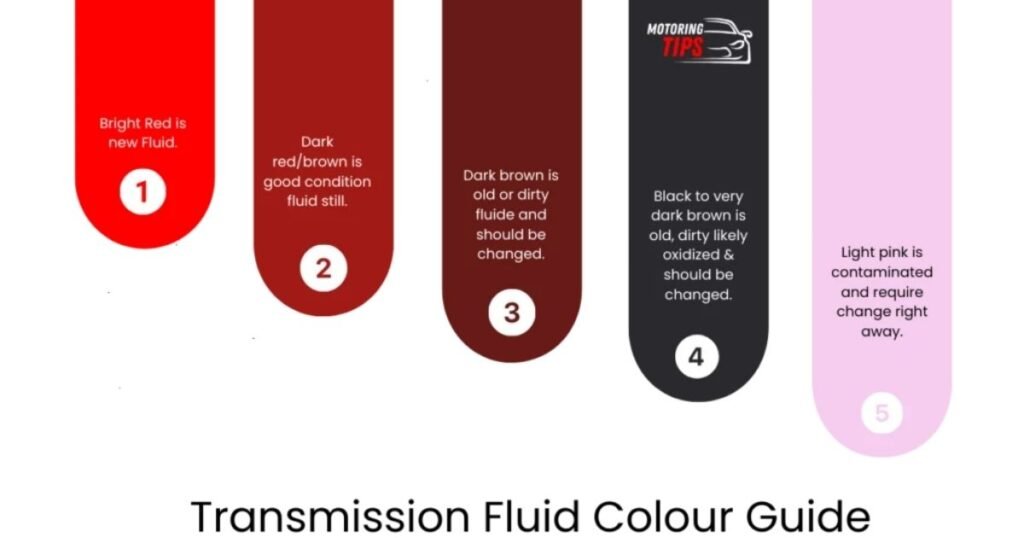
Transmission fluid color can provide useful clues about its condition. Fresh fluid is usually bright red or pink, while older fluid may become darker as it ages.
The interpretation may vary depending on the situation:
| Fluid Color | What It May Mean |
| Bright red | Usually indicates fresh, healthy transmission fluid. |
| Pink or light red | Often normal, depending on the fluid type and vehicle. |
| Light brown | May indicate aging fluid that needs inspection. |
| Dark brown | Can suggest old or degraded fluid. |
| Very dark brown | May point to overheated or badly worn fluid. |
| Black | Often signals burnt or severely degraded transmission fluid. |
| Milky or cloudy | May indicate contamination, often from coolant or moisture. |
Causes of Overheating Transmission Fluid
Transmission fluid can overheat when the transmission works too hard or cannot cool properly. High temperatures can damage fluid and internal components, reducing transmission performance.
- Heavy towing or carrying loads
- Driving in extreme heat
- Low transmission fluid levels
- Old or degraded fluid
- Blocked transmission cooler
- A transmission fluid leak
- Damaged internal components
Preventive Maintenance Tips
Regular transmission maintenance helps keep fluid clean and temperatures stable. Simple checks can reduce wear, improve gear shifting, and lower the risk of costly transmission problems.
- Check the fluid level regularly.
- Use the correct transmission fluid.
- Inspect for fluid leaks.
- Follow the recommended fluid change schedule.
- Keep the transmission cooling system clean.
- Avoid unnecessary heavy towing.
- Pay attention to unusual shifting or noises.
Cost of Ignoring the Symbol
Ignoring the Transmission Fluid Symbol can turn a small issue into a costly repair. Low fluid, overheating, or a leak can increase wear inside the transmission. You may notice slipping gears, delayed shifting, or strange noises. Continuing to drive can make the problem worse and reduce the transmission’s overall lifespan.
Repair costs depend on the cause and vehicle. A simple fluid service may cost far less than major transmission repairs. If internal parts become damaged, replacement can become very expensive. Acting early gives you a better chance of fixing the problem before serious damage develops.
Read More : Diameter Symbol Alt Code: Windows, Mac, Word, Excel & Copy Paste
Differences Between Transmission Fluid Symbol and Engine Warning Light
These warnings point to different systems. The symbole of transmission fluid usually relates to temperature or transmission issues, while the engine warning light covers broader engine and emissions problems.
| Transmission Fluid Symbol | Engine Warning Light |
| Usually relates to the transmission system. | Usually relates to the engine or emissions system. |
| May indicate high transmission fluid temperature. | May indicate an engine performance or emissions fault. |
| Can appear because of low transmission fluid. | Can appear because of sensor or ignition problems. |
| May warn about transmission overheating. | May warn about catalytic converter or fuel issues. |
| Can accompany slipping or delayed gear changes. | Can accompany rough running or reduced engine power. |
| Often involves transmission sensors. | Often involves engine sensors and control systems. |
| May require a transmission fluid inspection. | May require engine diagnostics. |
| Ignoring it can damage transmission components. | Ignoring it can worsen engine or emissions problems. |
| Its design varies between vehicle manufacturers. | Its design also varies by vehicle manufacturer. |
| The owner’s manual explains its specific meaning. | The owner’s manual confirms the exact warning meaning. |
Role of Sensors in Modern Vehicles
Modern vehicles use sensors to monitor transmission temperature, fluid pressure, speed, and other conditions. These sensors help the control system detect problems and activate dashboard warning indicators when needed.
Sensors send real-time information to the vehicle’s computer. A faulty sensor can sometimes trigger a warning even when the transmission itself works normally.
The interpretation may vary depending on the situation:
- Temperature sensors: Monitor transmission fluid temperature and can detect overheating.
- Pressure sensors: Track hydraulic pressure needed for proper gear shifting.
- Speed sensors: Help the system manage gear changes and transmission performance.
- Fluid level sensors: Some vehicles use sensors to detect low fluid conditions.
- Fault detection: Damaged wiring or sensors can create false warning lights and require diagnostic testing.
Driving Habits That Protect Transmission Fluid
Your driving habits can affect transmission temperature, fluid condition, and overall performance. Smooth driving reduces stress on the transmission and helps maintain proper lubrication.
Frequent hard acceleration, heavy towing, and sudden gear changes can create extra heat. Over time, this may affect fluid quality and internal components.
The interpretation may vary depending on the situation:
- Accelerate smoothly: Avoid sudden acceleration that creates unnecessary transmission heat.
- Allow proper warm-up: Give the vehicle time to reach normal operating conditions in very cold weather.
- Use correct gears: Follow your vehicle’s recommended gear settings, especially on hills.
- Limit heavy towing: Stay within the manufacturer’s towing limit to reduce transmission stress.
- Avoid unnecessary overheating: Stop safely and let the vehicle cool if the transmission temperature rises.
Transmission Fluid Change Intervals
Transmission fluid doesn’t last forever. Think of it like engine oil: it gradually loses its protective qualities as heat, friction, and time take their toll. The right transmission fluid change interval depends on your vehicle, transmission type, driving conditions, and manufacturer recommendations.
Manufacturer Recommendations
Your owner’s manual is the best starting point for service intervals. Some vehicles need fluid changes at specific mileage points, while others use longer intervals or claim the fluid is designed to last much longer. Always follow the schedule made for your exact vehicle rather than relying on a universal mileage rule.
Driving Conditions Matter
A car used for short trips, heavy towing, stop-and-go traffic, or steep hills may need more frequent fluid service. These conditions create extra heat and stress. For example, a vehicle that regularly pulls a trailer works harder than one driven gently on open roads. Severe-service schedules often reflect these added demands.
Automatic and CVT Transmissions
Different transmission designs can require different fluids and service methods. Automatic transmissions may use specific ATF, while CVTs require specially formulated CVT fluid. Using the wrong product can cause shifting problems or damage internal parts. Never choose fluid based only on color or a generic label.
Signs That Service May Be Due
Mileage isn’t the only clue that fluid needs attention. Dark or burnt-smelling fluid, rough shifting, slipping gears, or delayed engagement can signal trouble. A transmission fluid inspection can reveal problems before they become expensive. However, these symptoms can have other causes, so proper diagnosis matters.
Checking the Service Schedule
Keeping a simple maintenance record makes transmission care easier. Note the date, mileage, fluid type, and service performed each time. If you recently bought a used vehicle and cannot confirm its history, ask a qualified technician to inspect it. A small service today can help protect the transmission tomorrow.
Environmental Factors That Affect Fluid
Your transmission works in the background, but the environment can make its job much harder. Heat, cold, dust, water, and driving conditions can all affect transmission fluid performance. Over time, these factors may change fluid temperature, increase wear, or reduce lubrication. Knowing the risks helps you protect the transmission and avoid unnecessary problems.
Extreme Heat
Hot weather can raise transmission fluid temperature, especially during slow traffic or long drives. High temperatures can speed up fluid breakdown and reduce its protective properties. Towing in summer adds even more stress. A healthy cooling system helps control heat and keeps the transmission operating within a safer temperature range.
Cold Weather
Very cold temperatures can make transmission fluid thicker when you first start the vehicle. This can affect lubrication and cause slower gear engagement until the fluid warms up. Give your vehicle time to reach normal operating conditions. Using the manufacturer-approved fluid is especially important in areas with harsh winters.
Dust and Dirt
Dusty roads can affect vehicle components and contribute to maintenance problems. Although the transmission is sealed, damaged seals or vents can allow contaminants to enter. Dirt can reduce fluid cleanliness and increase internal wear. Regular inspections are helpful if you frequently drive on unpaved roads or in dusty environments.
Water and Humidity
Water contamination can harm transmission fluid and reduce its ability to protect internal components. Driving through deep water can increase the risk if seals or vents are compromised. Moisture can also contribute to corrosion. After significant water exposure, have the transmission inspected rather than assuming everything is fine.
Hills and Heavy Loads
Steep roads, heavy cargo, and towing place extra demands on the transmission. These conditions can increase heat and fluid workload. For example, climbing a long mountain road while towing can produce much more heat than normal city driving. Follow the vehicle’s towing limits and monitor transmission temperature during demanding trips.
Professional Inspection vs DIY Check
A DIY transmission fluid check can catch simple issues, while professional inspection provides deeper testing. Your choice depends on the vehicle, symptoms, tools, and problem severity.
| DIY Check | Professional Inspection |
| Checks visible fluid level | Performs a complete transmission inspection |
| Can identify obvious leaks | Uses diagnostic equipment to find hidden faults |
| May inspect fluid color | Can test fluid condition and temperature |
| Usually needs basic tools | Uses specialized transmission tools |
| Costs little or nothing | Involves a service fee |
| Suitable for routine checks | Better for warning lights or serious symptoms |
| May detect low fluid | Can identify pressure-related problems |
| Limited to accessible components | Can inspect sensors and electronic systems |
| Useful for simple maintenance | Better for complex transmission problems |
| May prevent minor issues from growing | Helps diagnose problems before major repairs |
Myths About Transmission Fluid
Many transmission fluid claims sound convincing but aren’t always true. Understanding the facts can help you avoid poor maintenance choices and protect your transmission from unnecessary damage.
- Myth: Transmission fluid never needs changing.
- Myth: Dark fluid always means the transmission is damaged.
- Myth: All transmission fluids work in every vehicle.
- Myth: More fluid is always better.
- Myth: A fluid flush fixes every transmission problem.
- Myth: Low fluid is harmless for short trips.
- Myth: You can ignore warning lights if the car still drives normally.
Frequently Asked Questions
What is the transmission oil symbol?
The symbol of Transmission Fluid usually shows a gear with a thermometer. It can warn about high temperature or transmission problems.
What are signs that I need transmission fluid?
The Transmission Fluid Symbol may appear with slipping gears, delayed shifting, strange noises, or burning smells caused by low fluid.
How do I check my transmission fluid?
Check your manual and locate the dipstick if available. The Transmission Fluid Symbol may indicate a problem requiring inspection.
What does normal transmission fluid look like?
Healthy transmission fluid is usually bright red or pink. Dark or burnt fluid alongside the Transmission Fluid needs attention.
What does the Transmission Fluid Symbol mean?
The Transmission Fluid Symbol can indicate high fluid temperature or another transmission issue. Check your manual for your vehicle’s exact meaning.
Can I drive with the Transmission Fluid Symbol on?
Driving with the Transmission Fluid may be risky. Stop safely if overheating, slipping gears, or burning smells occur.
Why does the Transmission Fluid Symbol appear?
The Transmission Fluid Symbol may appear because of low fluid, overheating, leaks, faulty sensors, or transmission problems.
Does low transmission fluid trigger the warning?
Low fluid can trigger the Transmission Fluid Symbol on some vehicles. Other models may use different warning indicators.
Can overheating cause the Transmission Fluid Symbol?
Yes, excessive heat can trigger the Transmission Fluid. Heavy towing, hot weather, low fluid, or cooling problems may contribute.
Is the Transmission Fluid Symbol serious?
The Transmission Fluid Symbol can signal a serious issue. Slipping gears, burning smells, or unusual noises require prompt inspection.
Conclusion
The Transmission Fluid Symbol can help you notice a possible transmission problem early. It may point to high fluid temperature, low fluid, or another fault. Understanding the symbol of transmission fluid can help you respond before a small issue becomes expensive. If you wonder what is the symbol for transmission fluid, check your vehicle manual for the exact design.
The Transmission Fluid Symbol should never be ignored when other symptoms appear. You may also see a transmission fluid cap symbol or transmission cap symbol under the hood. The symbol for transmission fluid can vary between vehicle models. Check the fluid level, watch for leaks, and seek professional help when needed. Regular maintenance can keep your transmission working smoothly and safely. A little attention today can help prevent major transmission trouble later.