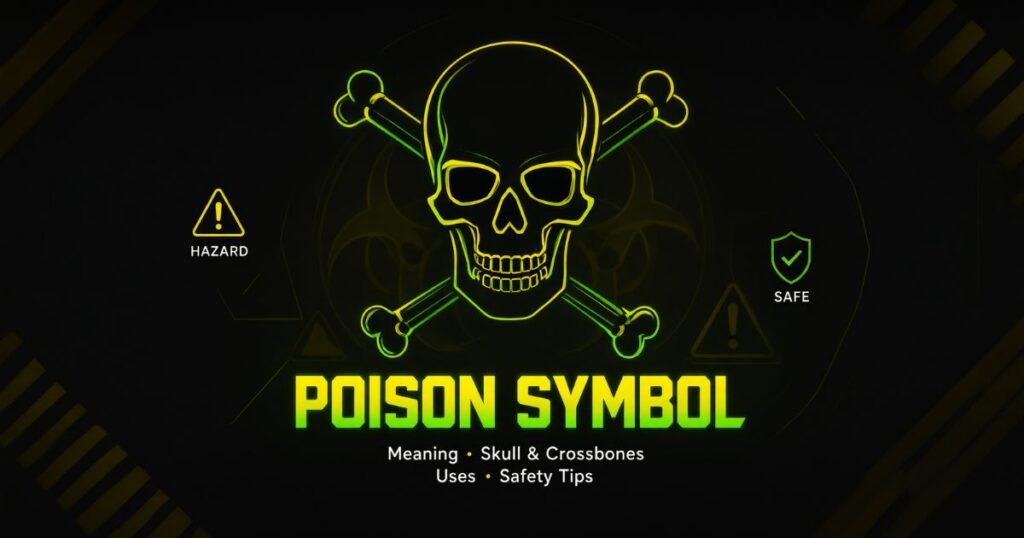

Have you ever seen a skull and crossbones on a bottle or warning label and wondered what it means? The Poison Symbol may look scary but it serves an important purpose. It warns people about dangerous substances that could harm their health. Understanding this symbol can help you recognize risks and make safer choices when handling chemicals or household products.
In this guide, you’ll learn the meaning, history and common uses of the Poison Symbol in simple English. We’ll explain where you might see it, what its design represents and why it matters. You’ll also understand how poison warning signs help people identify harmful substances and avoid potential accidents at home, school or work.
History of the Poison Symbol
The history of the poison dates back centuries when people needed clear ways to warn others about dangerous substances. The skull and crossbones gradually became a familiar sign of death and poison. Its simple design made the danger easier to recognize even when people couldn’t read written warnings or understand complicated instructions.
Over time, the symbol appeared on poison bottles, chemical containers and hazardous material labels. Its striking appearance helped people identify dangerous substances quickly. However, its exact origins remain difficult to trace because different cultures used various warning signs throughout history. The skull and crossbones eventually became widely associated with poison and deadly substances.
Today, the poison remains an important part of safety awareness. Modern chemical labeling systems use standardized pictograms to communicate specific hazards. These signs help workers, families and consumers recognize toxic substances and handle them carefully. Although warning labels have evolved, the skull and crossbones still serves as a familiar reminder to take chemical dangers seriously.
What Does the symbol of poison Mean?

The Poison usually features a skull and crossbones to warn people about toxic substances. It signals that a chemical or product may cause serious harm if swallowed, inhaled or absorbed through the skin. This familiar warning helps you recognize potential danger quickly and understand why careful handling matters when dealing with poisonous materials at home or work.
You may find this warning on pesticide containers, chemical bottles and other hazardous products. Always read the label carefully and follow its safety instructions before using anything potentially toxic. Keep these substances away from children and pets. Store them securely in their original containers to reduce accidental exposure and help protect everyone in your household from harm.
Common Appearance of the Symbol of Poison
The poison commonly appears as a skull and crossbones, warning people about substances that can cause serious harm. Its bold design helps make the toxic substance warning easy to recognize on chemical labels and containers.
The symbol’s appearance can vary depending on the labeling system, product and type of hazard. The skull and crossbones is used for acute toxicity, while other chemical hazard pictograms warn about risks such as corrosion or long-term health effects.
The interpretation may vary depending on the situation:
- Skull and crossbones: This familiar poison warning symbol indicates acute toxicity. Exposure through swallowing, inhalation or skin contact can cause severe harm or even death.
- Black symbol on a white background: Under the GHS system, the skull and crossbones appears in a white diamond with a red border. This standardized design helps people identify serious toxicity risks.
- Poison warning labels: Some products use words such as Poison or Toxic alongside the symbol. These written warnings provide extra information for people who may not recognize the pictogram.
- Different chemical hazard symbols: A product may display a flame, corrosion symbol or health hazard pictogram instead. Each sign communicates a different risk, so don’t assume every warning means the substance is poisonous.
- Labels with extra safety information: Chemical containers may include precautionary statements, first-aid guidance and handling instructions. Reading the complete label helps you understand the hazard and take appropriate precautions.
Where You Can Find the Poison Symbol
You can find the Poison on chemical containers, pesticide bottles and products containing highly toxic substances. It may appear on laboratory chemicals, industrial materials and some household products. Manufacturers use poison warning labels to alert people to potential dangers. These signs help you identify hazardous substances before handling, storing or using them at home or work.
You may also see poison warning signs in laboratories, factories, chemical storage rooms and agricultural workplaces. Some transportation containers display hazard labels when carrying toxic materials. Always read the product label and follow its safety instructions. Store poisonous substances securely and keep them away from children and pets. These simple precautions can help prevent accidental exposure and poisoning.
Read More : Caret Symbol: Meaning, Uses, Keyboard Shortcut & Examples
Household Products That May Display the Poison Symbol
Some household products contain toxic ingredients and may display a poison or warning label. Always check packaging before use and store these products safely.
- Pesticides: Insect sprays and rodent poisons may contain toxic chemicals.
- Cleaning products: Certain concentrated cleaners carry serious hazard warnings.
- Drain cleaners: Some formulas contain corrosive or harmful ingredients.
- Garden chemicals: Weed killers and insecticides may display toxicity labels.
- Automotive fluids: Antifreeze and some vehicle chemicals can be poisonous.
- Solvents and paints: Certain thinners and chemical products pose health risks.
- Laundry products: Some concentrated detergents and stain removers carry hazard warnings.
Poison Symbol Under the GHS System

Under the Globally Harmonized System (GHS), the Poison xis shown as a skull and crossbones inside a red diamond. This hazard pictogram warns that a chemical can cause serious harm or death through short-term exposure. It helps workers and consumers recognize acute toxicity risks on chemical labels.
The GHS system standardizes chemical hazard communication across many countries. Labels may also include signal words, hazard statements and safety instructions. Always read the complete label before handling a toxic substance and follow the recommended precautions to reduce exposure risks.
Difference Between Poison and Other Hazard Symbols
Chemical hazard symbols warn people about different dangers. The poison indicates acute toxicity while other symbols identify risks such as fire, corrosion, explosions or long-term health effects.
| Hazard Symbol | Meaning | Common Examples |
| Skull and crossbones | Warns of acute toxicity that may cause serious harm or death | Toxic chemicals, certain pesticides |
| Flame | Indicates substances that can catch fire easily | Flammable liquids, solvents |
| Corrosion | Warns that a substance can burn skin or damage metals | Strong acids, drain cleaners |
| Exploding bomb | Indicates explosive or highly reactive substances | Certain explosives, unstable chemicals |
| Gas cylinder | Warns about gas stored under pressure | Compressed gas cylinders |
| Health hazard silhouette | Indicates serious or long-term health risks | Carcinogens, respiratory sensitizers |
| Exclamation mark | Warns of less severe health effects or irritation | Irritating cleaners, harmful substances |
| Flame over circle | Indicates oxidizing substances that can intensify fires | Certain industrial chemicals |
| Environment hazard | Warns that a substance may harm aquatic life | Some pesticides, toxic chemicals |
| Biohazard symbol | Indicates biological materials that may pose infection risks | Infectious laboratory samples, medical waste |
Safety Tips Around Poison Symbols
Poison warning symbols help you recognize dangerous substances before handling them. Follow these simple safety tips to reduce exposure risks and protect yourself, your family and your pets.
- Read labels carefully: Check warning symbols and instructions before using any chemical product.
- Wear protective equipment: Use suitable gloves, goggles or other recommended protection when handling toxic substances.
- Avoid direct contact: Never touch, taste or smell chemicals to identify them.
- Store products safely: Keep poisonous substances in their original containers with labels intact.
- Protect children and pets: Store hazardous products in locked cupboards or secure storage areas.
- Follow usage instructions: Never mix chemical products unless the label specifically allows it.
- Dispose of chemicals properly: Follow label directions and local guidance to prevent harmful exposure and environmental damage.
What To Do After Poison Exposure
If you suspect poison exposure, stay calm and act quickly to protect yourself or the affected person. Move away from the source if it is safe. If someone has trouble breathing, collapses or experiences seizures, contact emergency services immediately. Check the product label for first-aid instructions and seek professional medical help without delay. Do not wait for symptoms.
If poison is swallowed, do not induce vomiting unless a medical professional advises it. For skin contact, remove contaminated clothing and rinse the area with running water. If chemicals enter the eyes, rinse gently with clean water. Keep the product container or label available for medical staff. Contact a poison control service if one is available in your area.
Poison Symbol in Laboratories
Laboratories use poison to identify chemicals that can cause serious harm. These warning labels help scientists, technicians and students recognize toxic substances before handling them. The skull and crossbones may appear on containers of chemicals that pose acute toxicity risks.
Safe laboratory practices include reading labels, wearing suitable protective equipment and following handling instructions. Keep toxic chemicals in properly labeled containers and store them in designated areas. Never eat or drink near laboratory chemicals. If exposure occurs, follow the laboratory’s emergency procedures and seek medical assistance when needed.
Read More : Frescade Meaning: Definition, Origin, Uses, Branding & Examples
Poison Symbol in Agriculture

The poison is important in agriculture because some pesticides, insecticides and weed killers contain toxic chemicals. These warning labels help farmers recognize potential dangers before using or storing agricultural products. Reading pesticide labels carefully can reduce the risk of poisoning and protect people, animals and the environment.
Farmers and agricultural workers should follow safety instructions whenever they handle hazardous chemicals. The poison warning symbol may indicate that exposure can cause serious harm. These precautions can help keep farms and nearby communities safer.
- Check pesticide labels: Read hazard warnings and usage instructions before applying chemicals.
- Wear protective equipment: Use recommended gloves, masks and protective clothing when required.
- Store chemicals securely: Keep pesticides in original containers away from food, animal feed and children.
- Avoid skin contact: Handle toxic products carefully and follow instructions to prevent exposure.
- Protect animals and crops: Follow label directions to reduce risks to livestock, beneficial insects and the environment.
- Use chemicals correctly: Never exceed the recommended amount or mix products unless the label permits it.
- Dispose of containers safely: Follow product instructions and local regulations for chemical waste and empty pesticide packaging.
Poison Symbol in Transportation
The poison helps identify toxic substances during transportation. It may appear on containers, packages and vehicles carrying dangerous chemicals. These warning labels alert drivers, handlers and emergency workers to potential risks. Clear hazard labeling helps people handle, store and transport poisonous materials more safely.
Toxic substances require careful packaging and proper identification during shipping. Workers should follow applicable transport regulations and check labels before moving hazardous materials. These precautions help reduce spills, accidental exposure and other risks during transportation.
- Check hazard labels: Confirm that containers display the correct warnings and required transport information.
- Use secure packaging: Keep toxic substances in suitable, sealed containers to prevent leaks.
- Follow transport regulations: Comply with applicable rules for moving hazardous chemicals by road, rail, air or sea.
- Separate incompatible chemicals: Keep substances apart when regulations or safety guidance require it.
- Train workers: Ensure drivers and handlers understand hazard symbols and emergency procedures.
- Prepare for spills: Follow the appropriate emergency plan if a container leaks or becomes damaged.
Why Children Should Learn the Poison Symbol
Children should learn the Poison because it helps them recognize dangerous substances at home, school and outdoors. Understanding this warning sign teaches them to stay away from toxic chemicals, medicines and cleaning products. Early safety education can reduce accidental poisoning and encourage children to ask adults for help when they see unfamiliar warning labels.
Parents and teachers can explain the skull and crossbones symbol using simple examples. Teach children never to touch, taste or smell unknown substances. Keep poisonous products locked away and remind children to tell a trusted adult if they find a suspicious container. These habits help build awareness and support safer choices as children grow.
Frequently Asked Question
What is the symbol for poison?
The Poison Symbol usually shows a skull and crossbones, warning that a substance may cause serious harm or death.
What are the top 5 poisons?
There is no universal top five list. The Poison warns about substances that can cause serious toxic effects.
What are 5 common signs of poisoning?
Common signs include nausea, vomiting, confusion, breathing difficulties and seizures. The Poison warns of potential danger.
What is a poison emoji?
The skull and crossbones emoji ☠️ represents poison or danger. The Poison on labels provides a formal chemical warning.
What poison is the silent killer?
Carbon monoxide is called a silent killer because it has no smell or color. The Poison may not identify its presence.
Which is the king of poison?
There is no official king of poison. The Poison warns about specific toxic hazards rather than ranking poisons.
What are the first signs of poison?
Early signs may include nausea, dizziness, headaches or stomach pain. The Poison Symbol warns of danger, even before symptoms appear.
What are the symptoms of silent poison?
Some toxic substances cause few early symptoms. The Poison helps identify hazards, but carbon monoxide needs a detector.
How to detect poison in the body?
Doctors may use examinations and blood or urine tests. The Poison Symbol warns about hazards but cannot confirm poisoning.
What should you do if poison exposure is suspected?
Seek medical advice immediately. If the Poison appears on the container, keep its label available for healthcare professionals.
Conclusion
Understanding the Poison Symbol helps you recognize dangerous substances and avoid potential harm. The skull and crossbones warning often appears on products containing toxic chemicals. Learning its meaning helps you make safer choices at home, school and work. Always read product labels carefully before handling chemicals. Follow the safety instructions and keep hazardous substances away from children and pets.
Chemical safety starts with awareness and careful handling. Store toxic products in their original containers and keep them securely closed. Never mix chemicals unless the label clearly allows it. Wear suitable protective equipment when needed and follow disposal instructions. If poisoning occurs, seek medical help immediately and follow professional guidance. Recognizing warning signs and taking simple precautions can reduce exposure risks. These habits help protect your family, coworkers and environment from harmful substances. The Poison Symbol reminds everyone to handle toxic products responsibly.

