
Have you ever seen a tiny double mark after a number and wondered what it means? You’re not alone. The Inch Symbol often looks like a quotation mark, which can cause confusion when reading measurements. If you’re trying to write inches correctly, understanding this small mark can make your measurements clearer and easier to understand.
In this guide, you’ll learn what the Inch Symbol means and how it is used in everyday measurements. We’ll explain the inches symbol, inch mark, and the correct symbol for inches. You’ll also see clear examples and learn the difference between the inch vs foot symbol, so you can use each measurement correctly.
Basic Inch Symbol Examples
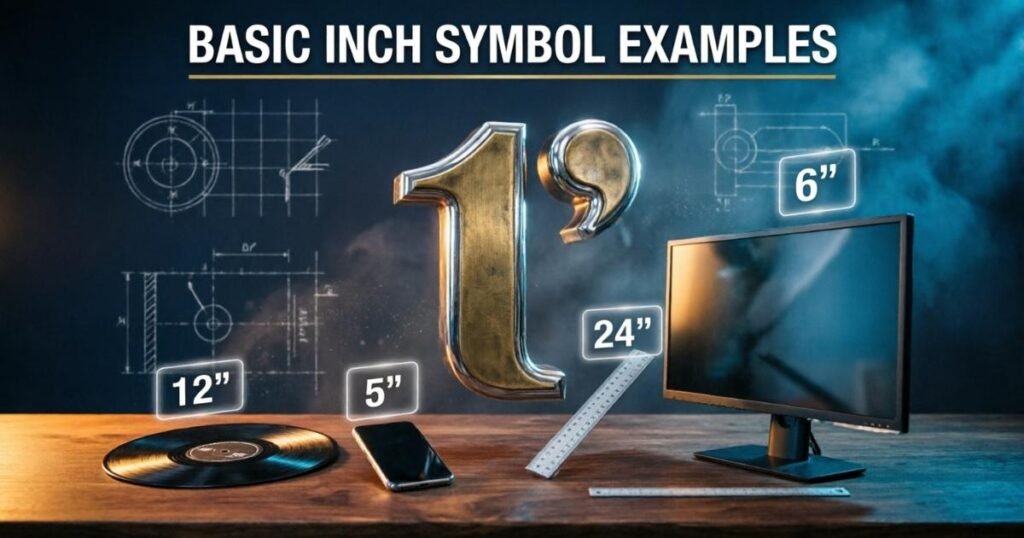
The inch shows measurements in inches. These examples cover common sizes and formats, helping you understand how the mark appears in everyday measurements, dimensions, and specifications.
| Measurement | Meaning |
| 1″ | One inch |
| 2″ | Two inches |
| 3″ | Three inches |
| 4″ | Four inches |
| 5″ | Five inches |
| 6″ | Six inches |
| 8″ | Eight inches |
| 10″ | Ten inches |
| 12″ | Twelve inches |
| 24″ | Twenty-four inches |
Origin of the Inch Symbol
The origin of the inch can be traced to old measurement systems used across Europe. The word inch comes from the Latin uncia, meaning one-twelfth. Traditionally, people divided one foot into twelve inches. This system made everyday measurements easier and became widely accepted over time. The inch later became an important unit in the imperial measurement system.
The modern inch is written as ″, known as the double prime symbol. It developed as a short way to show inch measurements without spelling out the word. Today, you’ll see it in construction plans, engineering drawings, product dimensions, and everyday measurements. The symbol makes measurement notation quick, clear, and easy to read.
Difference Between Inch Symbol and Foot Symbol
The main difference between the inch and foot symbol is simple: ″ represents inches, while ′ represents feet. These measurement marks are common in height measurements, construction, engineering drawings, and feet and inches notation.
The symbols come from traditional prime notation. The single prime ′ indicates feet, while the double prime ″ indicates inches. Using the correct mark prevents confusion, especially when writing dimensions such as 5′ 8″.
The interpretation may vary depending on the situation:
| Aspect | Inch Symbol (″) | Foot Symbol (′) |
| Unit | Represents inches | Represents feet |
| Symbol | Uses the double prime ″ | Uses the single prime ′ |
| Example | 10″ means 10 inches | 5′ means 5 feet |
| Height | 5′ 8″ means 5 feet and 8 inches | 5′ 8″ means 5 feet and 8 inches |
| Measurement | Used for shorter lengths and dimensions | Used for larger lengths and distances |
| Technical Use | Common in product dimensions and detailed measurements | Common in construction and architectural notation |
| Common Mistake | Using ′ for inches can cause confusion | Using ″ for feet gives the wrong measurement |
Read More : Volare Symbol Meaning: History, Colors, Design & Spiritual Symbolism
Foot vs Inch Symbol
The foot vs inch comparison is easy once you know what each mark means. The foot symbol is ′, while the inch is ″. These marks help show feet and inches clearly in measurements.
Both symbols come from prime notation and are widely used in construction, engineering, height measurements, and technical drawings. Using the correct symbol keeps dimensions accurate and prevents confusion.
The interpretation may vary depending on the situation:
| Aspect | Foot Symbol (′) | Inch Symbol (″) |
| Unit | Represents feet | Represents inches |
| Symbol | Single prime ′ | Double prime ″ |
| Example | 6′ means six feet | 6″ means six inches |
| Combined notation | 5′ 8″ means five feet, eight inches | 5′ 8″ means five feet, eight inches |
| Common use | Heights, room sizes, construction measurements | Small dimensions, product sizes, detailed measurements |
| Main benefit | Quickly shows larger measurements | Clearly shows shorter measurements |
| Common mistake | Using ″ for feet creates an incorrect measurement | Using ′ for inches can cause confusion |
Where the Inch Symbol Appears
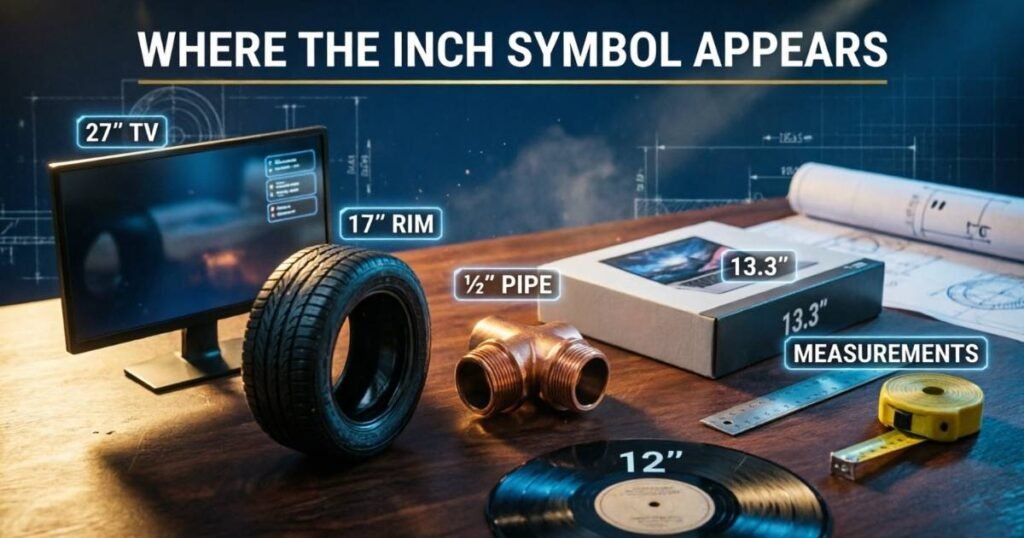
The inch appears in many places where people need to show length or dimensions clearly. You may see the inches symbol on products, drawings, measuring tools, screens, and technical documents.
Its use depends on the type of measurement and industry. Clear measurement notation helps readers understand dimensions without confusion.
The interpretation may vary depending on the situation:
- Product labels: Furniture, tools, appliances, and other products often use ″ to show physical dimensions.
- Construction plans: Builders may use the inch mark for material sizes, room dimensions, and detailed construction measurements.
- Engineering drawings: Technical and engineering drawings use inches to describe precise parts and components.
- Screens and displays: TVs, monitors, and laptops commonly show screen size in inches, such as 24″ or 55″.
- Rulers and measuring tools: Measuring tapes and rulers use inches to help users measure length accurately.
Inch Symbol in Construction
The symbol of inch in construction helps workers show precise dimensions quickly. It commonly appears on construction plans, material lists, and measurements. Builders use ″ for inches when measuring boards, pipes, fittings, and other materials. Clear inch notation reduces mistakes and helps teams understand project measurements correctly.
Common construction uses include:
- Board and lumber dimensions
- Pipe and fitting sizes
- Door and window measurements
- Construction plans and drawings
- Material thickness and spacing
Inch Symbol in Engineering
The Inch Symbol in Engineering helps professionals show exact dimensions on technical drawings and specifications. Engineers use ″ to describe part sizes, material thickness, pipe measurements, and component dimensions. This notation keeps measurements clear and consistent. It also helps engineers, manufacturers, and builders understand designs without confusion. Accurate symbols are especially important when small measurement errors can affect performance.
In engineering work, inches remain common in industries that use imperial units. You may see the symbol of inch in mechanical drawings, manufacturing plans, and product designs. Engineers also use it when checking physical dimensions or creating detailed specifications. Correct measurement notation improves communication and supports accurate drafting, production, and quality control.
Common engineering uses include:
- Machine part dimensions
- Material thickness
- Pipe and fitting sizes
- Technical drawings
- Product specifications
- Manufacturing measurements
Inch Symbol on Keyboards
Finding the symbol of inch on Keyboards can feel confusing because most keyboards don’t have a dedicated key for ″. The double quote key usually creates “, which looks similar to the inch mark. However, these characters are technically different. Knowing the difference helps you use accurate measurement notation in documents, technical drawings, and specifications.
If you need the correct symbol, you can copy ″ from a trusted source or use your device’s character menu. Word processors often include special character options too. On Windows and Mac computers, symbol tools can make typing easier. This is useful when writing dimensions, engineering notes, product measurements, or construction details.
Read More ; Air Cairo Meaning: Name, History, Branding, Tourism & Aviation Explained
Inch Symbol in Product Specifications
The symbol of inch in Product Specifications shows the size or dimensions of an item clearly. Manufacturers often use ″ for product length, width, height, and thickness. You may see it on furniture, tools, appliances, packaging, and electronic devices. Clear measurements help buyers understand the actual physical size before making a purchase.
- 12″ screen ,shows screen size.
- 24″ monitor ,indicates display size.
- 10″ × 6″ × 4″, shows length, width, and height.
- 1″ thick ,describes material thickness.
- 32″ TV ,identifies the screen size.
- 18″ shelf ,shows the shelf length or width.
Common Inch Symbol Mistakes
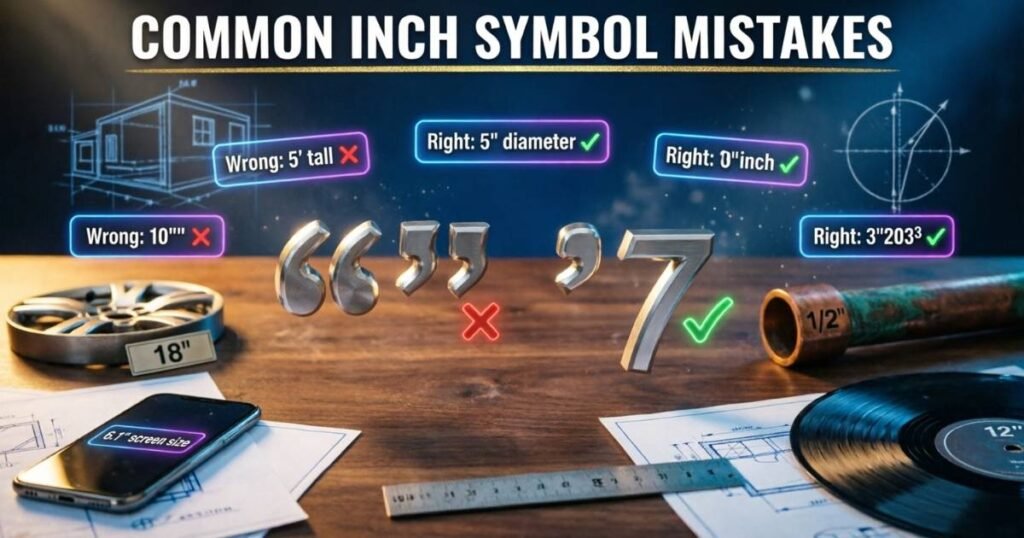
Common inch mistakes can make measurements confusing or inaccurate. Using the correct mark and notation keeps dimensions clear in construction, engineering, product specifications, and everyday writing.
- Using ′ instead of ″ for inches.
- Confusing the symbol of inch with quotation marks.
- Writing the symbol before the number.
- Mixing feet and inches incorrectly.
- Using inconsistent measurement notation.
- Forgetting inches in dimensional measurements.
- Using unclear symbols in technical drawings.
Inch Symbol and Quotation Marks
The symbol of inch and quotation marks look very similar, but they have different uses. The symbol of inch is ″, known as the double prime symbol. Quotation marks are punctuation marks used around spoken words, quoted text, or certain titles. Understanding this difference helps you write measurements and sentences correctly without creating unnecessary confusion.
In measurements, the symbol of inch comes after a number, such as 12″ or 5″. Quotation marks usually surround words or complete statements. They may look alike on some keyboards, but their functions remain different. Using the proper symbol creates clearer measurement notation in construction plans, engineering drawings, product specifications, and technical documents
Decimal Inches and Fractional Inches
Decimal inches and fractional inches are two common ways to show measurements. inches in decimal use numbers such as 2.5″, while fractional inches use forms like 2½″. Both methods describe the same length but suit different situations.
You may see them in construction, engineering, woodworking, and product measurements. The choice often depends on the tools and standards used.
- Decimal inches: 2.5″ is easy to use in calculations.
- Fractional inches: 2½″ is common on rulers and construction plans.
- Conversions: 0.5″ equals ½″.
- Precision: Decimal values can show very small measurements.
- Practical use: Fractions are often easier to read during hands-on work.
Inch Symbol in Height Measurements
The symbol of inch in height measurements shows the inches portion of a person’s height. It is commonly used with the foot symbol when writing heights in feet and inches, such as 5′ 8″.
This format is common in countries that use imperial measurement. Using the correct symbols makes height measurements clear and easy to understand.
The interpretation may vary depending on the situation:
- 5′ 8″: Means five feet and eight inches.
- 6′ 2″: Means six feet and two inches.
- Foot symbol: ′ represents feet in height measurements.
- symbol of inch: ″ represents inches after the number.
- Common mistake: Using ′ for inches can make a height measurement confusing.
Metric Conversion and Inches
Metric conversion helps you change inch measurements into metric units such as centimeters and millimeters. Since one inch equals 2.54 centimeters, this conversion is useful when working between imperial and metric systems.
The interpretation may vary depending on the measurement:
- Inches to centimeters: Multiply inches by 2.54.
- Inches to millimeters: Multiply inches by 25.4.
- 1 inch: Equals 2.54 centimeters or 25.4 millimeters.
- 2 inches: Equals 5.08 centimeters.
- 10 inches: Equals 25.4 centimeters.
Inches to Centimeters
Converting inches to centimeters is simple because one inch always equals 2.54 centimeters. This conversion helps when comparing imperial measurements with the metric system in school, construction, engineering, and everyday tasks.
The basic conversion works like this:
- 1 inch = 2.54 cm
- 2 inches = 5.08 cm
- 5 inches = 12.7 cm
- 10 inches = 25.4 cm
- 12 inches = 30.48 cm
To convert any measurement, multiply the number of inches by 2.54. For example, 8 inches × 2.54 equals 20.32 centimeters.
Why Accurate Inch Notation Matters
Accurate inch notation makes measurements clear and easy to understand. Using the correct inch helps prevent mistakes in construction, engineering, manufacturing, and product specifications. Even a small notation error can change how someone reads a dimension. Clear measurement marks also make drawings, plans, and instructions easier to follow.
Correct notation improves communication between designers, builders, manufacturers, and customers. It helps everyone understand the same measurement without confusion. Whether you’re writing 6″ or 6′, using the right symbol keeps dimensions accurate. This simple habit can save time, reduce errors, and support better results.
Digital Design and the Inch Symbol
Digital designers use the symbol of inch when creating layouts, product images, technical drawings, and print materials. It helps show physical dimensions clearly. Design software may display inches for page sizes, artwork, posters, and other projects. Accurate measurements ensure that a digital design matches its intended physical size when printed or produced.
The symbol becomes especially useful when digital designs move into manufacturing or printing. Designers must check whether software uses inches, pixels, points, or centimeters. A small measurement mistake can affect the final product. Clear dimensional notation makes digital work more accurate and helps printers, engineers, and manufacturers follow the design correctly.
Best Practices for Using the Inch Symbol

Using the symbol of inch correctly keeps measurements clear and professional. Follow simple notation rules to avoid confusion in writing, construction, engineering, and product specifications.
- Place ″ after the number.
- Use ″ to represent inches.
- Use ′ for feet.
- Keep feet and inches notation consistent.
- Avoid confusing ″ with quotation marks.
- Use clear measurements in technical drawings.
Frequently Asked Question
How to write 2 inches?
Write 2 inches as 2″ using the Inch Symbol after the number. This clear format works for measurements, dimensions, drawings, and product specifications.
How do you write 5 feet 7 inches?
Write 5 feet 7 inches as 5′ 7″. The foot symbol comes after five, while the symbol of inch follows seven for clear height notation.
What is the symbol for inch?
The standard Inch Symbol is ″, called the double prime symbol. It appears after a number, such as 1″, 5″, or 12″.
How to write 5 feet 4 inches in short?
Write 5 feet 4 inches as 5′ 4″. The symbol of inch shows four inches, while the single prime symbol represents five feet in this format.
What is the Inch Symbol?
The symbol of inch is ″, and it appears after a measurement. For example, 8″ means eight inches and follows standard measurement notation.
How do you write 1 inch correctly?
Write one inch as 1″. The symbol of inch comes after the number and clearly identifies the measurement as inches in everyday and technical writing.
Is ″ the symbol for inches?
Yes, ″ is commonly used as the symbol of inch. It is called the double prime and appears after numbers in dimensional measurements.
How do you write 10 inches?
Write ten inches as 10″. The symbol of inch follows the number without needing to spell out the unit, keeping the measurement short and clear.
What does 6″ mean?
The measurement 6″ means six inches. Here, the Inch Symbol identifies the unit and helps readers understand the stated length quickly.
What is the difference between ′ and ″?
The single prime ′ represents feet, while the double prime ″ represents inches. The symbol of inch is essential when writing feet and inches correctly.
Should there be a space before the Inch Symbol?
Usually, no space appears between the number and symbol of inch. Write 12″ rather than 12 ″ for clean and standard measurement notation.
Conclusion
The Inch Symbol makes measurements clear and easy to understand. It appears as ″ after a number, such as 5″ or 12″. You may also hear terms like inches symbol, inch mark, or double prime. If you ask what is the symbol for inches, the standard answer is ″. Correct notation keeps dimensions accurate and readable.
Understanding the Inch Symbol also helps you avoid confusion with feet. The inch vs foot symbol difference is simple: ″ represents inches, while ′ represents feet. You’ll see these marks in construction, engineering, product sizes, height measurements, and digital design. Using the correct symbol makes measurements clear, consistent, and professional in everyday and technical work.