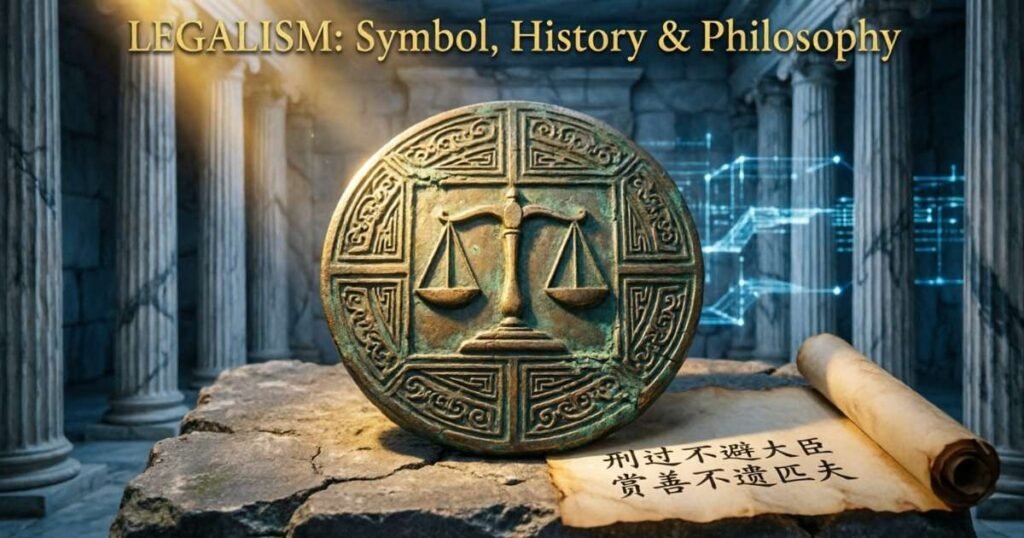

Have you ever searched for the Legalism Symbol and wondered why there is no single official design? The legalism symbol china can feel confusing because Legalism was mainly a philosophy focused on law, order, authority, and strict governance. If you want to understand its meaning and historical role, finding clear and simple information can be difficult for many readers.
This guide explains the Legalism Symbol in simple language and provides useful historical context. We’ll discuss the symbols of legalism and explain how the symbol for legalism can represent law, discipline, authority, and social control. You’ll also learn about the symbol of legalism, its connection to ancient Chinese governance, and its meaning today.
Historical Background of Legalism Symbol
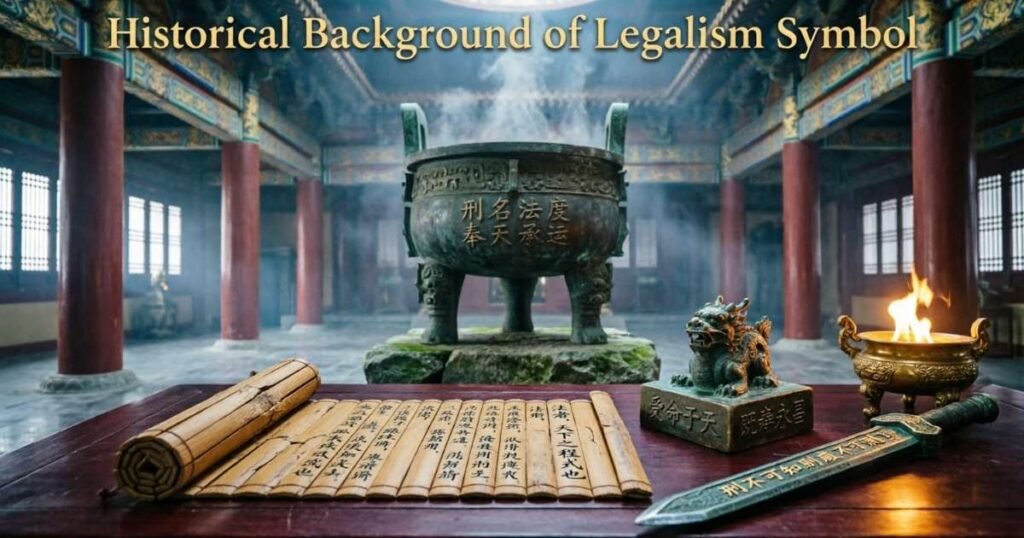
The Legalism is linked to an ancient Chinese philosophy focused on law, order, discipline, and strong government. Legalism grew during the Warring States period when China faced constant conflict and political instability. Rulers needed practical ways to maintain control and protect their states. Legalist thinkers believed strict rules could create stability, obedience, and effective government.
Thinkers such as Shang Yang and Han Feizi played important roles in developing Legalist ideas. They supported clear laws, strict punishments, rewards, and strong state authority. Their teachings focused less on personal morality and more on practical governance. These ideas later influenced the Qin Dynasty and its highly centralized system of administration and political control.
There was no single official ancient emblem known as the Legalism Symbol. Instead, modern interpretations often use visual ideas connected with law, authority, discipline, order, and control. Geometric shapes, straight lines, seals, and inscriptions may suggest these themes. Such imagery helps represent the principles and historical influence of Legalism in ancient Chinese political thought.
Meaning Behind the Legalism Symbol
The Legalism represents ideas linked with law, authority, discipline, and social order. Legalism valued clear rules and strong enforcement. Its symbolic meaning often reflects a structured society where people follow laws and rulers maintain control. There is no single official symbol, so different designs may represent these ideas through shapes, characters, seals, or other visual elements.
Common meanings associated with Legalist symbolism include:
- Law: Clear rules guide society.
- Order: Structure helps prevent disorder.
- Authority: Strong leadership maintains stability.
- Discipline: Rules encourage obedience and responsibility.
- Control: Government uses enforcement to maintain peace.
- Power: Central authority supports effective governance.
Core Elements Found in Legalism Symbols
What makes a symbol feel powerful? Often, it’s the shape, balance, and meaning behind it. Legalism symbols commonly reflect the main ideas of Legalist philosophy, including law, authority, discipline, order, and control. There was no single official emblem in ancient China. Instead, modern designs use visual elements that suggest these powerful principles.
Law and Authority
Law stands at the heart of Legalist thought. Symbols connected with Legalism may use strong lines, official seals, or Chinese characters to suggest authority. These elements can represent rules that apply across society. Think of them like a firm boundary on a road. They show where people should stay and reinforce the importance of following established laws.
Order and Structure
Order was another important idea in Legalist philosophy. Geometric shapes, balanced layouts, and straight lines can visually express structure and stability. A square, for example, may suggest firmness and clear boundaries. Such designs can represent a society organized around fixed rules. The visual balance reflects the Legalist belief that structure helps maintain social order and political stability.
Discipline and Control
Discipline reflects the strict nature of Legalist principles. Symbols may use sharp angles, rigid forms, or symmetrical patterns to create a sense of control. These features can suggest obedience and enforcement rather than personal freedom. In this way, the design communicates how Legalist government relied on clear expectations, strict laws, rewards, and punishments to manage society.
Power and Centralized Government
Legalism placed strong emphasis on state power and centralized authority. Symbolic designs may therefore include bold shapes or official-looking markings that suggest government control. Ancient Chinese seals provide useful visual inspiration because they were connected with official authority. When used carefully, these elements can represent the powerful role of rulers and administrators within a Legalist government.
Geometric and Traditional Elements
Geometric forms can make Legalism symbols appear firm and organized. Squares, straight lines, symmetry, and repeated patterns may suggest discipline and structure. Chinese seal script can also add historical character to a design. However, these features shouldn’t be mistaken for an official ancient Legalist emblem. They are modern visual interpretations inspired by Legalist ideas and Chinese artistic traditions.
Common design elements:
Legalism-inspired designs often combine simple shapes with strong symbolic meanings. Common elements include:
- Squares: Suggest structure, boundaries, and order.
- Straight lines: Represent firmness and discipline.
- Symmetry: Creates a sense of balance and control.
- Seal script: Adds a connection to ancient Chinese writing.
- Official seals: Suggest authority and administration.
- Bold geometric forms: Can represent strength and centralized power.
Symbolic breakdown in table form:
| Design Element | Symbolic Meaning | Connection to Legalism |
| Square | Order and boundaries | Reflects structured rules |
| Straight lines | Discipline and firmness | Suggests strict laws |
| Symmetry | Balance and structure | Represents organized governance |
| Seal script | Tradition and authority | Connects with ancient Chinese culture |
| Official seal | Government power | Suggests administrative control |
| Geometric shapes | Stability and structure | Reflects Legalist order |
| Strong borders | Limits and control | Represents enforcement and authority |
The key takeaway is simple: Legalism symbols are usually interpreted through their ideas rather than one fixed ancient design. Their shapes, lines, and traditional elements can visually communicate law, discipline, authority, and order. This makes them useful for explaining the deeper meaning of Legalist philosophy without suggesting that ancient Legalism had one universally recognized symbol.
Read More : Vendavel Meaning: Origin, Pronunciation, Symbolism, Name & Uses
Legalism Symbol in Ancient Governance
The Legalism Symbol can represent the strict ideas that shaped ancient Chinese governance. Legalist rulers valued clear laws, discipline, and strong authority. They believed a powerful state could maintain order through rules and enforcement. These ideas became especially important during the Qin Dynasty, when centralized government helped unite and control a large territory.
Legalist governance focused on practical control rather than personal morality. Officials followed established laws and carried out government policies. Rewards encouraged loyalty, while punishments discouraged disobedience. Although ancient Legalism had no single official emblem, modern symbols often use seals, straight lines, and geometric forms to represent authority, structure, discipline, and state power.
Philosophical Depth Behind the Symbol
The Legalism carries deeper meaning when viewed through Legalist philosophy. Legalist thinkers believed society needed firm rules and strong leadership to remain stable. They placed practical governance above personal virtue. A symbol inspired by these ideas may therefore represent authority, discipline, obedience, and the belief that clear laws can create social order.
Key ideas behind its symbolism include:
- Fa: Clear laws and standards.
- Shu: Methods used by officials.
- Shi: The ruler’s position and power.
- Discipline: Encourages people to follow rules.
- Authority: Supports centralized government.
- Order: Reduces disorder through enforcement.
Differences from Other Chinese Philosophy Symbols

Chinese philosophy symbols can look similar, but their meanings often come from very different ideas. A Legalism usually emphasizes law, authority, discipline, and social control, while other Chinese philosophy symbols may focus more on harmony, morality, or natural balance.
Legalism developed during the Warring States period alongside other major schools of ancient Chinese philosophy. Confucianism stressed moral virtue and proper relationships. Daoism emphasized harmony with nature and a natural way of living. These differences also shape their modern symbolic interpretations.
| Philosophy | Symbolic Focus | Main Idea | Common Interpretation |
| Legalism | Law and authority | Strong government | Order and control |
| Confucianism | Morality and harmony | Moral behavior | Respect and duty |
| Daoism | Nature and balance | Natural living | Peace and flexibility |
| Legalism | Discipline and power | Centralized rule | Stability and enforcement |
| Confucianism | Relationships | Social responsibility | Family and respect |
| Daoism | Simplicity | Natural order | Harmony and balance |
| Legalism vs. Others | Rules vs. harmony | Different ideals | Law, virtue, or nature |
Modern Use of Legalism Symbol
Today, the Legalism is mainly used as a visual representation of law, discipline, authority, and structured control. Since ancient Legalism had no single official emblem, modern designs often draw inspiration from Chinese characters, seals, geometric forms, and other historical elements.
Legalism remains relevant in discussions about Chinese political philosophy, leadership, and ancient governance. Modern interpretations can also appear in education, artwork, tattoos, books, and digital designs.
The interpretation may vary depending on the situation:
- Education: Used to explain Legalist philosophy and ancient Chinese government.
- Art and design: Geometric shapes and seal script can represent order and authority.
- Tattoos: Some people choose Legalism-inspired designs to express discipline or strength.
- Historical themes: Symbols may appear in projects about the Qin Dynasty or Warring States period.
- Modern interpretation: Some view the imagery positively as a sign of stability, while others associate it with strict control.
Read More : Yellow Font Meaning: Symbolism, Psychology, Uses, Shades & Readability
Legalism Symbol in Tattoo Design
A Legalism Symbol tattoo can express discipline, strength, authority, order, or personal control. Many designs use Chinese characters, geometric shapes, seals, or straight lines inspired by Legalist ideas. These elements can create a bold appearance while showing an interest in ancient Chinese philosophy. For some people, the design also represents structure, responsibility, and the importance of clear rules.
Before getting a Legalism-inspired tattoo, check the meaning and historical accuracy carefully. Ancient Legalism did not have one official tattoo symbol or universal emblem. Modern designs are usually artistic interpretations of Legalist principles. Choose meaningful characters and understand their translation. This helps you avoid using symbols that look appealing but carry a different meaning.
Visual Characteristics That Define the Symbol
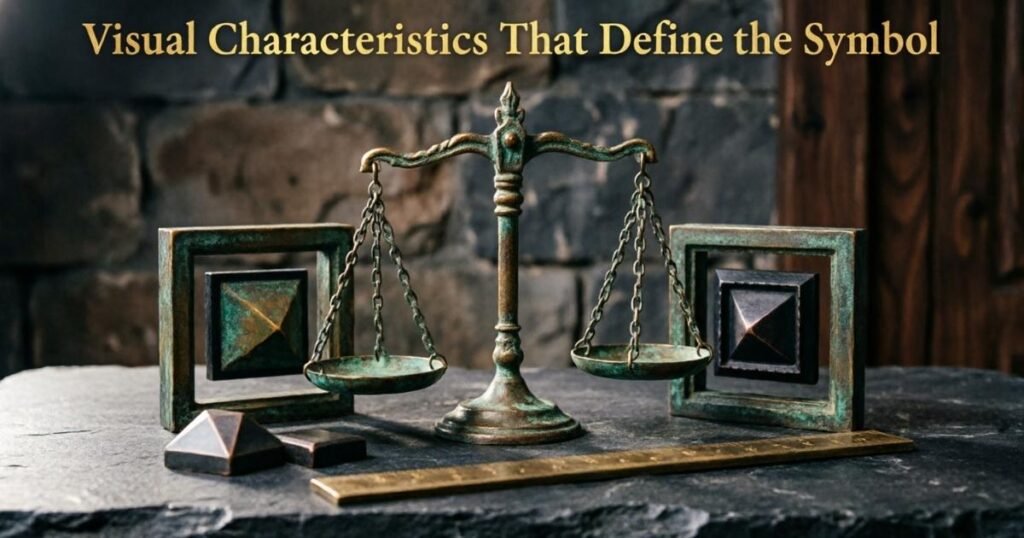
Legalism-inspired designs often use strong, structured forms to reflect law, authority, discipline, and order. While there is no single official ancient Legalist emblem, modern Legalist symbols may draw from Chinese seal script, geometric shapes, official seals, and traditional markings.
These visual features connect the design with ideas found in ancient Chinese governance and Legalist philosophy.
The interpretation may vary depending on the situation:
- Square shapes: Suggest structure, boundaries, stability, and fixed rules.
- Straight lines: Represent firmness, discipline, and clear authority.
- Symmetry: Creates a balanced appearance linked with order and control.
- Seal script: Adds a traditional Chinese appearance and historical character.
- Bold forms: Can suggest strength, state power, and centralized authority.
Cultural Interpretation Across Time
The meaning of Legalist ideas changed across different periods of Chinese history. In ancient times, Legalism focused on law, discipline, authority, and strong government. Its influence became especially important during the Qin Dynasty. Rulers used strict laws and centralized control to maintain order, strengthen the state, and manage a large and diverse population during times of political change.
Today, Legalism is mainly studied as an important school of Chinese political philosophy. Modern designs may use Legalist-inspired imagery to suggest order, strength, discipline, or authority. However, these meanings are often modern interpretations rather than ancient traditions. There was no single universally accepted Legalism emblem used throughout Chinese history. Context therefore plays an important role in understanding its symbolism.
Why People Choose the Legalism Symbol Today
People choose Legalist-inspired symbols today to express strength, discipline, order, authority, and interest in ancient Chinese philosophy. The design can also carry a personal meaning.
- Discipline: Represents self-control and commitment.
- Strength: Suggests inner power and determination.
- Order: Reflects structure and stability.
- Authority: Expresses leadership and confidence.
- History: Shows interest in ancient China.
- Philosophy: Represents Legalist ideas and political thought.
- Tattoo design: Offers a bold, meaningful visual style.
Practical Applications in Design
Legalism-inspired designs can work well when you want to communicate order, authority, discipline, or structure. Simple shapes and traditional Chinese elements can create a strong visual identity.
- Tattoos: Use meaningful characters or geometric forms.
- Logos: Create bold designs that suggest authority.
- Posters: Highlight historical or educational themes.
- Book covers: Support content about Chinese philosophy.
- Digital art: Combine seals with modern layouts.
- Educational materials: Explain Legalist ideas visually.
- Decorative designs: Add structured Chinese-inspired patterns.
Minimalist Legalism Symbol Concept
A minimalist Legalism Symbol concept focuses on simple shapes and clear meaning. Straight lines, squares, symmetry, and balanced spaces can suggest law, order, discipline, and authority. The design doesn’t need many details to feel powerful. A clean structure can communicate the organized nature of Legalist philosophy while keeping the artwork modern and easy to recognize.
For a modern concept, you might combine a simple square with a traditional Chinese character or seal-style marking. Keep the lines clean and avoid unnecessary decoration. Remember that this is a modern interpretation, not an official ancient emblem. Its meaning comes from the Legalist ideas it represents and the designer’s intended message.
Frequently asked Questions
What is Legalism in Christianity?
Christian legalism emphasizes strict religious rules for spiritual acceptance. The Legalism here refers to ancient Chinese Legalism, not Christian teachings.
What Is the Definition of Legalism?
Legalism is a Chinese philosophy focused on strict laws, discipline, authority, and strong government. The Legalism Symbol represents these ideas visually.
What Is the Belief of Legalism?
Legalism supports strict laws, rewards, and punishments to maintain order. The Legalism reflects discipline, authority, obedience, and control.
What Best Describes Legalism?
Legalism centers on strict laws and strong government. The Legalism Symbol represents order, authority, discipline, and political control.
Is There an Official Legalism Symbol?
No official ancient emblem existed. The Legalism is a modern interpretation inspired by law, authority, order, and discipline.
What Does the Legalism Symbol Represent?
The Legalism Symbol represents law, authority, discipline, control, and social order. Its meaning comes from ancient Legalist principles.
Who Founded Chinese Legalism?
Several thinkers developed Chinese Legalism, including Shang Yang and Han Feizi. The Legalism reflects their influential philosophical ideas.
How Did Legalism Influence the Qin Dynasty?
Legalism influenced Qin governance through strict laws and centralized authority. The Legalism represents this connection between power, law, and control.
What Is the Difference Between Legalism and Confucianism?
Legalism emphasizes laws and enforcement, while Confucianism emphasizes morality and relationships. The Legalism therefore reflects authority and rules.
What Does a Legalism Symbol Tattoo Mean?
A Legalism Symbol tattoo can represent discipline, strength, authority, or order. Always check the historical meaning before choosing Chinese characters.
Conclusion
The Legalism Symbol represents ideas such as law, order, authority, and discipline in ancient Chinese philosophy. The legalism china was not one fixed ancient emblem. Instead, modern designs may use shapes, seals, lines, or Chinese characters. The symbols of legalism often reflect strong government, control, and social order. A symbol for legalism can also express power and strict rules.
Understanding the Legalism Symbol helps explain the deeper ideas behind Chinese Legalism. The symbol of legalism can represent the role of law and authority in ancient governance. It also shows how Legalist thinkers influenced the Qin Dynasty. If you use this imagery in art or a tattoo, check its meaning carefully. This helps ensure your design communicates the message you truly intend.