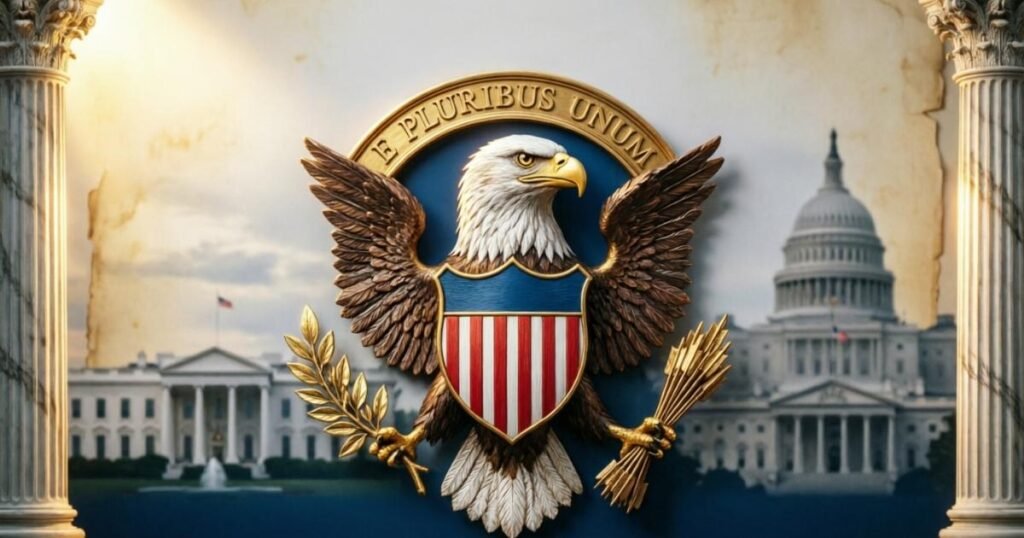

Have you ever looked at a government seal or emblem and wondered what its symbols really mean? Many official designs use familiar colors, shapes, animals, or national elements. Yet their deeper meaning isn’t always clear. Executive Branch Symbol: Meaning, History, Colors & Government Identity helps explain these visual details and why they matter in government communication and public life.
In this guide, you’ll find a simple explanation of Executive Branch Symbol: Meaning, History, Colors & Government Identity. We’ll cover its meaning, historical development, common design elements, colors, legal use, and role in public trust. You’ll also learn how executive symbols differ around the world and where these symbols commonly appear today.
Common Elements Found in Executive Branch Symbols
Executive branch often use familiar images to represent leadership, authority, service, unity, protection, and national identity. Their designs vary by country and government system.
| Common Element | Meaning |
| Eagle | Represents strength, freedom, courage, and national authority. |
| Shield | Symbolizes protection, security, and defense of the nation. |
| Flag | Reflects national identity, unity, and sovereignty. |
| Star | Often represents hope, guidance, unity, or national ideals. |
| Crown | Can symbolize sovereignty, leadership, or royal authority. |
| Globe | Represents international relations, global responsibility, and diplomacy. |
| Laurel Wreath | Suggests honor, achievement, peace, and victory. |
| Official Seal | Identifies government authority and authentic official documents. |
| National Colors | Connect the symbol with a country’s history and identity. |
| Emblems and Crests | Combine meaningful images to represent government institutions and national values. |
Why Executive Branch Symbols Matter
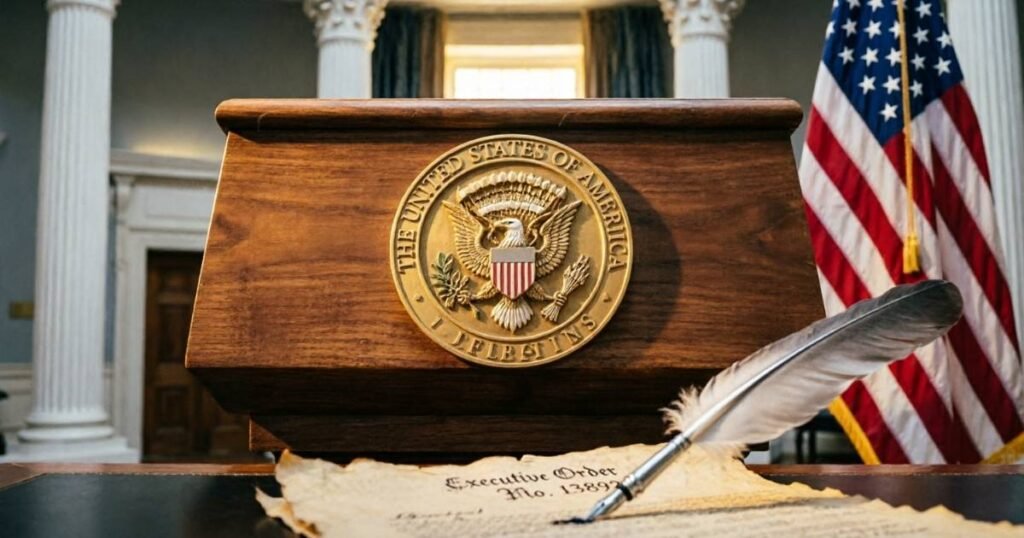
Executive branch help people recognize government authority quickly. They can represent leadership, national values, public service, and responsibility. A familiar emblem or seal also gives official documents and government offices a clear identity.
These symbols can also strengthen public understanding of government. They remind citizens that executive institutions have important duties and defined powers.
- Build government identity
- Represent national values
- Support public recognition
- Reflect authority and responsibility
- Strengthen public trust
Executive Branch Symbol in the United States
In the United States, executive authority is often represented through the Great Seal of the United States and the presidential seal. These designs feature important national elements, including the eagle, shield, stars, and national colors. Each element reflects ideas of strength, unity, freedom, and government authority.
The symbols appear across official government materials and presidential settings.
- American eagle represents strength
- Shield reflects protection
- Stars represent unity
- Olive branch suggests peace
- Arrows represent defense
Executive Branch Symbols Around the World
Executive branch vary widely across countries and cultures. Some governments use national animals, flags, shields, crowns, stars, or official seals. These elements can represent leadership, strength, unity, sovereignty, and national pride. Their designs often reflect a country’s history, political traditions, and values. They also help citizens recognize official institutions and government authority more easily.
Different countries may choose symbols that match their unique constitutional systems and cultural backgrounds. For example, some use presidential seals while others feature royal emblems or national coats of arms. These symbols can appear on government buildings, documents, websites, and official communications. Over time, their designs may change as national identities, governments, and public expectations develop.
Difference Between Government Branch Symbols
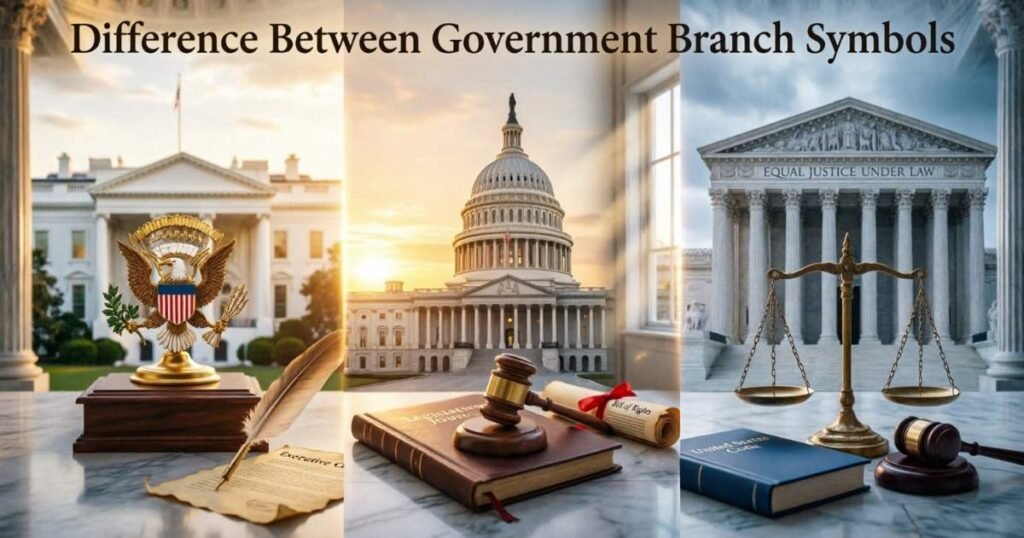
Government branch symbols help distinguish the executive, legislative, and judicial branches. Each symbol can represent a different role, such as leadership, lawmaking, justice, or constitutional authority.
These differences become clearer when you look at the duties of each branch. The executive branch focuses on enforcing laws, the legislative branch creates laws, and the judicial branch interprets them. Their symbols often reflect these separate powers and responsibilities.
The interpretation may vary depending on the situation:
| Government Branch | Common Symbol | What It Represents | Main Focus |
| Executive Branch | Seal, eagle, or national emblem | Leadership and authority | Enforcing laws |
| Legislative Branch | Capitol, book, or gavel | Lawmaking and representation | Creating laws |
| Judicial Branch | Scales, courthouse, or gavel | Justice and fairness | Interpreting laws |
| Executive Symbols | Presidential or government seal | National leadership | Administration and public service |
| Legislative Symbols | Parliamentary or congressional emblem | Public representation | Debate and legislation |
| Judicial Symbols | Scales of justice | Fairness and legal balance | Courts and legal decisions |
| Overall Difference | Distinct official emblems | Separation of powers | Checks and balances |
Historical Development of Executive Symbols
Executive symbols have changed as governments, leadership systems, and national identities have developed. Early emblems often reflected royal authority, while modern government symbols usually emphasize public service, constitutional power, and national unity.
Official seals, coats of arms, flags, and national animals became important ways to identify executive institutions. Over time, their designs became more formal and standardized.
The interpretation may vary depending on the situation:
- Royal beginnings: Early executive emblems often showed crowns, royal animals, and other signs of sovereign power.
- Rise of republics: Republican governments introduced symbols focused on citizenship, liberty, equality, and national independence.
- Official seals: Government seals became useful for authenticating documents and identifying executive offices.
- Modern identity: Today, executive symbols often combine traditional elements with clean designs that work well in print and digital media.
- Changing perceptions: While these symbols can build unity and trust, some people may view powerful imagery as a sign of authority or political influence.
Read More : Therian Symbol Meaning: History, Designs, Tattoos, Colors & Spiritual Significance
Colors Used in Executive Branch Symbols
Colors give executive branch a stronger visual identity. They can reflect national pride, authority, peace, strength, or historical traditions. Government seals and official emblems often use colors connected to a country’s flag or national heritage.
The meaning of a color can change between countries and cultures. Its use may also depend on the history and purpose of the government symbol.
The interpretation may vary depending on the situation:
- Blue: Often suggests trust, stability, loyalty, and public service. It can create a calm and professional appearance.
- Red: May represent courage, strength, sacrifice, or national struggle. However, it can also suggest power or conflict.
- White: Commonly represents peace, honesty, unity, and simplicity. It can make official designs look clean and balanced.
- Gold: Often communicates honor, prestige, achievement, and authority. It may give a government emblem a formal appearance.
- Green: Can symbolize hope, renewal, land, or prosperity. Its meaning depends strongly on national and cultural traditions.
Legal Protection of Executive Branch Symbols
Government symbols may receive legal protection to prevent misuse, copying, or false representation. Official seals and emblems can identify legitimate government communication. Their use may be controlled by laws, regulations, or government policies, depending on the country and symbol.
Legal rules can help protect public trust and official identity.
- Restricts unauthorized use
- Protects official documents
- Prevents misleading representations
- Supports government identity
- Rules vary by country
Executive Branch in Education
The Executive Branch can make government lessons easier for students to understand. Teachers can use seals, emblems, flags, and simple drawings to explain executive power. These visual examples help students connect symbols with leadership, public service, and national identity. They also make classroom discussions about the three branches of government more interesting and easier to remember.
Students can compare executive symbols with those of the legislative and judicial branches. This comparison shows how each branch has different duties and powers. Classroom activities may include drawing symbols, identifying design elements, or discussing their meanings. Such lessons can strengthen civic knowledge and help young learners understand checks and balances.
Digital Use of Executive Branch Symbols
Digital platforms make government symbols easy to recognize across websites, documents, apps, and social media. They provide a consistent visual identity for official communication.
- Government websites: Symbols help visitors identify official pages.
- Digital documents: Seals can appear on forms and notices.
- Social media: Official accounts may use government emblems.
- Mobile apps: Symbols can support trusted government services.
- Online education: Digital symbols help explain civic topics.
- Email communication: Official branding improves recognition.
- Digital archives: Symbols help organize historical government records.
Design Characteristics
Executive symbols usually combine simple shapes, meaningful colors, and national imagery. Their designs aim to communicate authority, identity, unity, and public service while remaining clear and recognizable.
- Simple shapes: Clear forms make symbols easy to recognize.
- National imagery: Flags, animals, or landmarks can reflect identity.
- Balanced layout: Elements are arranged for a professional appearance.
- Meaningful colors: Colors can express national values and traditions.
- Strong symbols: Eagles, shields, stars, and seals often suggest authority.
- Readable details: Designs should remain clear at different sizes.
- Consistent style: Repeated design elements strengthen official government identity.
Executive Branch Symbol and Public Trust

An official government symbol can help people recognize legitimate public institutions. Clear and consistent designs may create a sense of stability, authority, and responsibility. When citizens see familiar seals or emblems, they can connect them with government services and official communication. This visual identity can make public information easier to identify and understand.
However, a symbol alone cannot create trust. People also judge government through transparency, fairness, effective leadership, and responsible actions. If an emblem becomes linked with controversy or misuse, public confidence may weaken. Therefore, executive symbols work best when they support honest communication and accountable government practices.
Modern Design Evolution
Modern government symbols have become cleaner, simpler, and easier to use across different platforms. Executive branch now need to work on websites, mobile screens, official documents, and printed materials.
Earlier designs often included detailed artwork and complex elements. Today, designers may simplify these features while keeping important national meanings and historical connections.
The interpretation may vary depending on the situation:
- Simplified details: Complex images are often reduced for better readability at small sizes.
- Digital-friendly designs: Modern symbols can remain clear on websites, apps, and social media.
- Traditional elements: Designers often keep familiar seals, colors, animals, or national imagery.
- Flexible branding: A symbol may have different versions for print, screens, and official documents.
- Public response: Modern designs can feel fresh and accessible, but excessive simplification may weaken historical character.
Misconceptions About Executive Branch Symbols
Executive branch can be misunderstood because their designs often contain historical images, national colors, and official emblems. A symbol may represent government identity without having one fixed meaning in every country.
Some people also confuse executive symbols with those of the legislative or judicial branches. Understanding their purpose helps separate symbolism from actual government powers.
The interpretation may vary depending on the situation:
- One universal symbol: There isn’t a single symbol used by every country’s executive branch. Designs depend on national traditions and government systems.
- Symbol equals political power: An emblem represents an institution, but it doesn’t create or increase its legal authority.
- All symbols mean the same thing: Eagles, shields, stars, and colors can have different meanings across cultures.
- Official seal means personal leadership: A government seal usually identifies an institution rather than representing one individual.
- Symbols guarantee public trust: A strong design can support recognition, but trust depends on transparency, fairness, and responsible government action.
Read More : Inch Symbol: Meaning, Uses, Examples, and How to Type It
How Executive Branch Symbols Support Government Identity
Executive branch give government institutions a strong and recognizable identity. Official seals, emblems, colors, and national images can represent leadership, service, unity, and authority. These visual elements often connect modern government offices with national history and shared values. They also help citizens quickly identify official institutions, documents, announcements, and public services in everyday situations.
A consistent government symbol can make communication look clear and professional across different platforms. People may see it on websites, buildings, forms, signs, and official letters. This repeated visual identity improves recognition and helps separate genuine government information from unrelated content. When used responsibly, symbols can also support a stronger connection between citizens and public institutions.
Frequently Asked Questions
What is the symbol for an executive?
An Executive Branch often uses an eagle, seal, shield, or national emblem. It can represent leadership, authority, service, and government identity.
What is a symbol of government?
An Executive Branch can identify government authority and official institutions. Common symbols include seals, flags, shields, stars, and national animals with historical meanings.
What’s another word for executive branch?
Another term for the executive branch is the executive government or administrative branch. An Executive Branch Symbol represents this part of government and its functions.
Who are all in the executive branch?
The executive branch includes the president, vice president, cabinet members, departments, and agencies. An Executive Branch Symbol can represent these institutions and their official responsibilities.
What does the Executive Branch Symbol represent?
An Executive Branch Symbol represents leadership, authority, public service, national identity, and responsibility within a government system.
What is an example of an Executive Branch Symbol?
A presidential seal, eagle, shield, or national emblem can serve as an Executive Branch for official government identity.
Does every country have an Executive Branch Symbol?
No. Each country may use different seals, emblems, flags, animals, or colors as its Executive Branch.
What colors are common in an Executive Branch Symbol?
An Executive Branch may use national colors such as blue, red, white, green, or gold to express values.
Where can you see an Executive Branch Symbol?
You can see an Executive Branch Symbol on government websites, documents, buildings, signs, certificates, and official communications.
Why are Executive Branch Symbols important?
An Executive Branch helps people recognize government institutions and connects official communication with national identity, history, and public service.
Is an Executive Branch Symbol the same as a government seal?
Not always. An Executive Branch may include a seal, while a government seal specifically authenticates official documents.
Conclusion
An executive branch symbol helps people recognize government leadership and official institutions. It can show authority, public service, unity, and national identity. Different countries use different executive branch based on their history and traditions. Common designs may include seals, shields, eagles, flags, stars, and national colors. These images can make government communication easier to identify and understand. A clear symbol of the executive branch can also connect citizens with public institutions and their responsibilities.
Understanding these symbols also helps you compare the executive branch symbol with a legislative branch symbol. Each branch has different duties and may use different visual elements. Symbols for executive branch institutions can appear on websites, documents, buildings, and official materials. While designs differ, every executive branch can support government identity, recognition, and public understanding.