
Have you ever received a message with “ISTG” and had no idea what the person meant? Online slang can be confusing, especially when people use short forms without explaining them. If you’re searching what does istg mean, you probably want a quick and clear answer. Understanding ISTG Meaning can help you follow conversations and avoid misunderstanding someone’s tone or message.
This guide gives you a simple explanation of ISTG Meaning and shows how people use istg in everyday texts and social media posts. You’ll learn what does istg mean in slang, what the abbreviation stands for, and how its meaning can change depending on the situation. By the end, you’ll understand this popular internet expression clearly.
ISTG Full Form

The ISTG full form is “I Swear to God.” People use this texting abbreviation to show honesty or strong feelings. It appears often in casual texting, social media, and online chats. When someone writes ISTG, they usually want to make their statement sound more serious or convincing. It can also add emotion to an everyday message.
The meaning can change slightly with the situation. Someone might use ISTG when they’re frustrated, surprised, excited, or joking with friends. For example, “ISTG I didn’t do it” shows a strong promise of honesty. In another message, “ISTG this is hilarious” may simply express excitement or dramatic humor.
What Does ISTG Meaning in Simple Words?
ISTG means “I Swear to God.” People use it to show they’re being honest, serious, or strongly emotional. It’s common in texts, chats, and social media. You might see it when someone wants you to believe their statement. The expression can sound intense, but friends often use it casually without meaning anything harsh or offensive.
For example, someone might text, “ISTG I told you already.” This can show frustration or emphasis. Another person might say, “ISTG this movie is amazing!” to express excitement. The meaning depends on the situation, the person’s tone, and the words used around ISTG.
5 Common Ways People Use ISTG
Sometimes three letters can carry a lot of emotion. ISTG can sound serious in one message and playful in another. Its meaning depends heavily on the situation and the speaker’s tone. Here are five common ways people use this popular texting abbreviation in everyday conversations, group chats, and social media.
1. To Show You Are Serious
People often use ISTG when they want others to take their words seriously. It adds extra weight to a statement or promise. For example, “ISTG I’m telling the truth” shows strong honesty. You may also see it when someone wants to prove they’ll do something. In this context, ISTG works like an emotional underline.
2. To Show Frustration
ISTG can express frustration when someone feels ignored, annoyed, or tired of repeating themselves. A message like “ISTG you never listen to me” carries clear irritation. However, it doesn’t always mean the person is truly angry. Friends may use it casually when something keeps going wrong. The surrounding words usually reveal how serious the frustration really is.
3. To Show Surprise
You can also use ISTG when something catches you completely off guard. For example, “ISTG I thought you were joking!” shows genuine surprise. It can make a reaction feel stronger and more personal. People often pair ISTG with exclamation marks or emojis to emphasize their feelings. This usage is common in fast-moving chats and social media conversations.
4. To Be Funny or Dramatic
Sometimes ISTG is used purely for humor or dramatic effect. Someone might text, “ISTG this cat is trying to ruin my life” after a funny incident. They probably aren’t making a serious promise. Instead, ISTG makes the story sound exaggerated and entertaining. Friends often use this style to add personality, sarcasm, or playful drama to ordinary conversations.
5. To Give a Warning
ISTG can also introduce a warning when someone has reached their limit. A message such as “ISTG don’t touch my food again” sounds firm and direct. The speaker may be annoyed but still joking. Context matters here because the same words can feel playful between close friends or genuinely threatening during a heated argument. Always consider the relationship and situation.
Overall, ISTG isn’t limited to one emotion. It can show seriousness, frustration, surprise, humor, or warning. The best way to understand it is to read the full message and consider the person’s usual texting style.
ISTG Meaning Depends on Tone
The ISTG Meaning often depends on the tone of the message. People use ISTG to show that they’re serious, honest, annoyed, surprised, or excited. The same abbreviation can feel completely different in different conversations. To understand it correctly, look at the words around ISTG and consider what the person is trying to express.
For example, “ISTG I’m telling the truth” sounds serious and honest. However, “ISTG this movie is so funny!” sounds playful and excited. Emojis can also change the mood. A laughing emoji may make ISTG feel humorous while an angry emoji can make the message sound stronger or more frustrated.
What Does ISTG Meaning From a Girl?
When a girl uses ISTG, it usually means “I Swear to God.” She may use it to show honesty, excitement, frustration, or surprise. The meaning depends on the conversation. For example, “ISTG you look amazing” can sound playful or friendly while “ISTG I didn’t do it” may show that she wants you to believe her.
What Does ISTG Meaning From a Guy?
When a guy says ISTG, the meaning is also based on context and tone. He might use it to emphasize a promise, react to something funny, or show frustration. For example, “ISTG bro, that was hilarious” sounds casual. It doesn’t automatically suggest anger or a hidden message. Look at the complete conversation for better context.
Does ISTG Mean Someone Is Angry?
ISTG doesn’t always mean someone is angry. People commonly use it to add emotion or emphasis to their messages. However, it can sound annoyed when combined with words like “stop,” “again,” or “never.” For example, “ISTG stop doing that” may show frustration. Emojis, punctuation, and previous messages can help you understand the actual mood.
Read More : “gng” Meaning in Text: Full 2026 Slang Guide
What Does ISTG Mean on Snapchat?
On Snapchat, ISTG usually means “I Swear to God.” People use it in snaps, chats, and captions to show strong feelings. It can express honesty, frustration, surprise, or humor. For example, “ISTG that was the funniest snap” sounds playful. The meaning still depends on the conversation and the sender’s tone.
What Does ISTG Meaning on TikTok?
On TikTok, ISTG has the same basic meaning, “I Swear to God.” You may see it in comments, captions, or messages. Users often add ISTG when reacting strongly to a video or situation. For example, “ISTG this trend is everywhere” can show frustration or humor. Context helps explain the intended feeling.
What Does ISTG Meaning on Instagram?
On Instagram, ISTG is common in comments, captions, stories, and direct messages. It usually adds emphasis to what someone is saying. A message like “ISTG you’re so funny” can sound friendly and playful. However, “ISTG I told you already” may sound frustrated. The surrounding words usually reveal the person’s real emotion.
What Does ISTG Mean on WhatsApp?
On WhatsApp, ISTG usually means “I Swear to God.” People use it in private chats, group conversations, and status updates. It can show honesty, frustration, excitement, or surprise. For example, “ISTG I sent the message yesterday” sounds serious. Meanwhile, “ISTG this video is hilarious” sounds playful and excited.
What Does ISTG Meaning in Gaming or Discord?
In gaming and Discord chats, ISTG means “I Swear to God” and often adds strong emotion to a message. Players may use it after losing a match or reacting to something funny. For example, “ISTG this player is everywhere” may show frustration. Friends can also use it jokingly during casual gaming conversations.
Is ISTG Rude?
ISTG is not automatically rude. Its tone depends on the situation, the words around it, and your relationship with the person. Among friends, it can sound casual or funny. However, saying “ISTG, stop doing that” may sound harsh. If you’re unsure, use calmer words such as “Honestly” or “I promise” instead.
Is ISTG a Bad Word?
ISTG is not generally considered a swear word by itself. However, it includes the phrase “I Swear to God,” which some people may find inappropriate or offensive because of its religious reference. It’s usually best for casual conversations. Avoid using it in formal settings or around people who may be uncomfortable with religious expressions.
When Should You Avoid ISTG?

Sometimes, the words you use matter more than the message itself. While ISTG is common in casual texting, it can sound too strong or even disrespectful in certain situations. Knowing when to avoid this slang helps you communicate clearly and respectfully, especially when the conversation involves work, school, sensitive beliefs, or serious conflict.
At Work
Professional conversations usually require clear and respectful language. Avoid ISTG in emails, meetings, reports, or messages to managers because it can sound too casual or emotional. For example, instead of writing “ISTG I finished the project,” say “I’ve completed the project.” Professional wording keeps your message focused and avoids confusion about your tone or intention.
In School Work
ISTG may not fit essays, assignments, presentations, or messages to teachers. Schoolwork often expects formal language and careful communication. Writing “ISTG this answer is correct” can make an academic response sound casual. You can express the same confidence by saying “I’m confident this answer is correct.” Save texting abbreviations for relaxed conversations with friends or classmates.
With Someone Who May Find It Offensive
Remember that ISTG includes the phrase “I Swear to God,” so some people may dislike it because of their personal beliefs or values. If you’re unsure how someone feels about religious expressions, choose neutral wording instead. A simple “I promise” or “Honestly” can communicate the same idea without creating unnecessary discomfort during an otherwise friendly conversation.
During a Serious Argument
ISTG can make an argument feel more intense, especially when emotions are already high. Saying “ISTG you never listen” may sound like an attack rather than an attempt to solve the problem. During serious disagreements, use calm and direct language. Explain what happened and how you feel. This approach leaves more room for understanding instead of escalating tension.
A little awareness can prevent a lot of misunderstanding. ISTG works best in relaxed conversations where everyone understands the tone. When the situation is formal, sensitive, or emotionally serious, clearer words are usually the better choice.
Read More : Pedrovazpaulo Business Consultant: Growth & Success Guide 2026
How to Use ISTG meaning in a Sentence
ISTG is easy to use in casual texts when you want to show honesty, strong feelings, frustration, surprise, or excitement. Keep it natural and match the conversation’s tone.
- To show honesty: “ISTG I didn’t take your phone.”
- To show frustration: “ISTG this app never works.”
- To show excitement: “ISTG that concert was amazing!”
- To show surprise: “ISTG I thought you were joking!”
- To make a joke: “ISTG my cat hates me.”
- To make a promise: “ISTG I’ll call you tonight.”
- To emphasize a point: “ISTG you need to try this game.”
Funny ISTG meaning Examples
ISTG can make ordinary messages sound more dramatic and funny. Friends often use it to exaggerate small problems, react to silly situations, or add playful emotion to a conversation. These examples show how ISTG can be used without sounding serious or angry.
- “ISTG my cat owns this house now.”
- “ISTG I opened the fridge five times and nothing changed.”
- “ISTG my phone knows when I’m about to sleep.”
- “ISTG this homework is personally attacking me.”
- “ISTG you send the funniest memes.”
- “ISTG I came for one snack and ate everything.”
- “ISTG that was the longest five-minute wait ever.”
- “ISTG my alarm and I are in a toxic relationship.”
- “ISTG this Wi-Fi disappears whenever I need it most.”
- “ISTG I laughed at that for way too long.”
ISTG vs FR

ISTG and FR are common texting abbreviations, but they add different feelings to a message. Knowing the difference helps you understand whether someone is swearing, agreeing, emphasizing, or simply showing strong emotion.
| Point | ISTG | FR |
| Full form | I Swear to God | For Real |
| Main meaning | Shows strong emphasis or honesty | Shows agreement or truth |
| Tone | Can sound serious or emotional | Usually casual and relaxed |
| Common use | Promises, frustration, surprise, or emphasis | Agreement, confirmation, or emphasis |
| Example | “ISTG I didn’t do it.” | “FR, that movie was great.” |
| Emotional strength | Usually stronger | Usually milder |
| Use in texting | Very common in casual chats | Very common in casual chats |
| Can be funny? | Yes, especially when exaggerating | Yes, especially in reactions |
| Religious reference | Includes “God” | No religious reference |
| Best way to understand | Look for the emotion behind it | Look for agreement or confirmation |
ISTG vs NGL
they both add emphasis to messages, but they have different purposes. it expresses strong emotion or honesty while NGL introduces a truthful opinion, admission, or personal feeling.
| Point | ISTG | NGL |
| Full form | I Swear to God | Not Gonna Lie |
| Main meaning | Shows strong honesty or emotion | Introduces an honest opinion |
| Common purpose | Emphasis, promises, frustration, or surprise | Sharing thoughts or admitting something |
| Tone | Strong and emotional | Casual and conversational |
| Example | “ISTG I didn’t do it.” | “NGL, I really like this song.” |
| Emotional strength | Usually stronger | Usually softer |
| Religious reference | Includes “God” | No religious reference |
| Common use | Texts, chats, and social media | Texts, chats, comments, and social media |
| Can show honesty? | Yes, strongly | Yes, in a casual way |
| Best way to understand | Focus on the emotion and emphasis | Focus on the opinion or admission |
ISTG vs TBH
they both appear in casual conversations, but they serve different purposes. it adds strong emotion or emphasis while TBH introduces an honest opinion or personal thought.
| Point | ISTG | TBH |
| Full form | I Swear to God | To Be Honest |
| Main meaning | Shows strong emotion or emphasis | Shows honesty or personal opinion |
| Common purpose | Promises, frustration, surprise, or emphasis | Opinions, admissions, or honest thoughts |
| Tone | Strong and emotional | Usually calm and conversational |
| Example | “ISTG this is so funny.” | “TBH, I like this movie.” |
| Emotional strength | Usually stronger | Usually softer |
| Religious reference | Includes “God” | No religious reference |
| Common use | Texts, chats, and social media | Texts, chats, comments, and social media |
| Can show honesty? | Yes, with strong emphasis | Yes, directly |
| Best way to understand | Focus on emotion and intensity | Focus on the honest opinion |
ISTG vs OMG
they are both common texting abbreviations, but they express different reactions. it shows strong emotion or emphasis while OMG mainly expresses surprise, excitement, shock, or disbelief.
| Point | ISTG | OMG |
| Full form | I Swear to God | Oh My God |
| Main meaning | Shows strong emotion, honesty, or emphasis | Shows surprise, excitement, or shock |
| Common purpose | Promises, frustration, emphasis, or strong reactions | Reacting to unexpected or exciting situations |
| Tone | Strong and emotional | Often surprised or excited |
| Example | “ISTG I told you already.” | “OMG, that was amazing!” |
| Emotional strength | Can sound intense | Usually expresses sudden emotion |
| Religious reference | Includes “God” | Includes “God” |
| Common use | Texts, chats, and social media | Texts, chats, comments, and social media |
| Can be funny? | Yes, especially when exaggerating | Yes, especially during surprising moments |
| Best way to understand | Focus on emphasis and the speaker’s emotion | Focus on the reaction to something unexpected |
How Should You Reply to ISTG?
Sometimes, replying to ISTG is less about the abbreviation and more about the emotion behind it. The same three letters can show honesty, frustration, humor, or anger. Before you respond, read the full message and consider the situation. A thoughtful reply can keep the conversation friendly instead of making a small misunderstanding feel much bigger.
If They Are Serious
When someone uses ISTG seriously, they usually want you to believe or understand their point. Respond directly instead of joking around. For example, if they say, “ISTG I didn’t take your charger,” you could reply, “Okay, I believe you.” If you need more information, ask calmly. A simple response often shows that you’re listening and taking them seriously.
If They Are Frustrated
Frustration can make ISTG sound stronger than the sender intended. If someone says, “ISTG this app never works,” you don’t need to treat it like a personal attack. Try responding with something supportive, such as “Yeah, it’s been acting weird today.” Acknowledging their frustration can quickly lower tension and keep the conversation relaxed without unnecessary arguments.
If They Are Joking
When ISTG appears in a funny or exaggerated message, matching their playful energy usually works well. For example, if someone writes, “ISTG my dog planned this whole mess ” you could reply, “Your dog is definitely guilty!” Emojis, playful comments, or light sarcasm can fit naturally here. The key is recognizing that ISTG can add drama without expressing genuine anger.
If They Are Angry With You
If someone says ISTG while clearly angry with you, avoid responding with another emotional message. Give yourself a moment and focus on what caused the problem. For example, you might say, “I understand you’re upset. Let’s talk about what happened.” This keeps the conversation calm and shows maturity. Sometimes a softer response works better than defending yourself immediately.
The best reply depends on the emotion behind ISTG. Listen to the wording, notice the context, and consider your relationship with the person. When you understand the tone first, your response will feel more natural and less likely to create confusion.
What Does “ISTG Bro” Mean?
“ISTG bro” usually means “I Swear to God, bro.” People use this phrase in casual chats with friends. It can show honesty, frustration, surprise, or strong emotion. The word “bro” makes the message feel more friendly and informal. For example, “ISTG bro, I didn’t take your charger” shows that the speaker wants to sound convincing.
The meaning can also change with the situation. “ISTG bro, that game was wild may show excitement or humor. If someone says, “ISTG bro, stop doing that,” they may be frustrated. Check the surrounding messages to understand the tone. The phrase is common in texting, gaming chats, and social media conversations.
What Does “ISTG If You…” Mean?
“ISTG if you…” usually starts a strong warning, promise, or emotional statement. The speaker is often saying that they will react if something happens. For example, “ISTG if you eat my fries…” sounds like a playful warning. The exact meaning depends on what comes after “if you” and the relationship between the people chatting.
This phrase can sound serious, funny, or frustrated. Friends may use it dramatically to joke about small situations. For example, “ISTG if you send that photo!” could be playful teasing. However, during an argument, it may sound more serious. Always read the full message before deciding what the person means.
Does ISTG Always Mean “I Swear to God”?
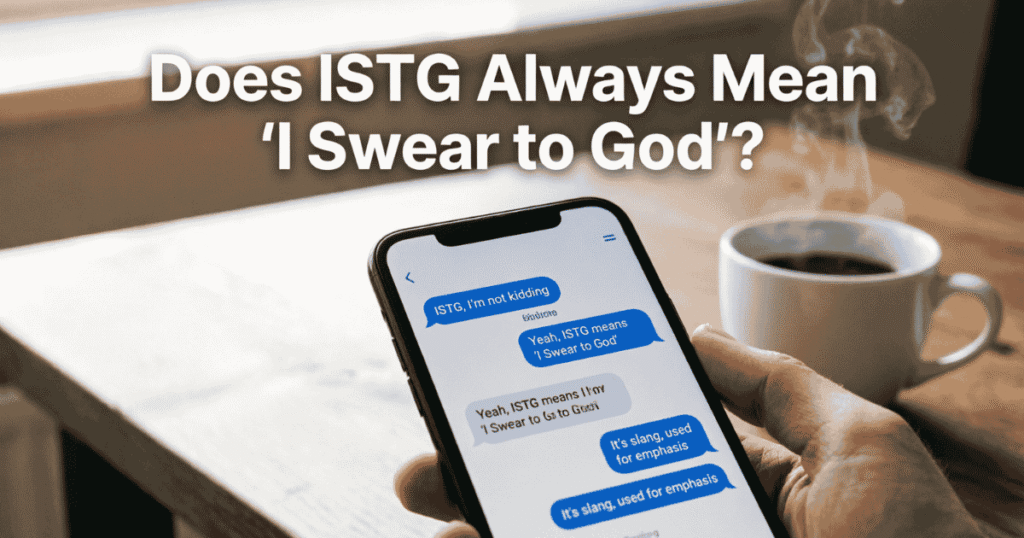
ISTG usually means “I Swear to God” in texting, chats, and social media. People use it to show honesty, frustration, excitement, or strong emotion. However, the exact feeling can change depending on the conversation. Sometimes people use ISTG casually or dramatically without making a serious promise.
For example, “ISTG this cat is adorable” shows excitement rather than a serious oath. Likewise, “ISTG I didn’t do it” sounds more serious and defensive. So while the full form stays the same, the tone can change. Always check the surrounding words to understand the intended meaning.
A Simple Way to Understand ISTG
Three letters can mean different things depending on the moment. To understand ISTG correctly, don’t look at the abbreviation alone. Pay attention to the complete message, emojis, previous texts, and the person’s usual communication style. These small clues can help you tell whether ISTG sounds serious, funny, frustrated, excited, or simply dramatic.
Read the Full Message
The words around ISTG often reveal its real meaning. For example, “ISTG I didn’t touch it” sounds like a serious statement, while “ISTG this cat is adorable” sounds excited or playful. Reading the entire message gives you useful context. Instead of judging the abbreviation by itself, treat it like one piece of a larger conversation.
Check the Emoji
Emojis can completely change the feeling behind ISTG. A laughing emoji may make the message playful, while an angry face can signal frustration. For example, “ISTG you’re hilarious sounds friendly rather than serious. Emojis work like tone indicators in texting. They provide clues about emotion when you can’t hear the person’s voice or see their expression.
Read the Messages Before It
Previous messages can explain why someone used ISTG. If you were discussing a misunderstanding, “ISTG I told you yesterday” may show frustration. However, if you were sharing funny stories, the same abbreviation could add playful drama. Looking at the conversation leading up to ISTG helps you understand the speaker’s intention instead of guessing from three letters alone.
Look at the Person’s Normal Style
People have different texting habits, so consider how the sender usually communicates. Someone who regularly uses slang may write ISTG casually without feeling angry or serious. Another person who rarely uses abbreviations might be emphasizing something strongly. Knowing their normal style gives you an important clue and can prevent you from reading too much emotion into one message.
Look for the Main Emotion
Finally, ask yourself what emotion seems strongest in the message. Is the person serious, annoyed, surprised, excited, or joking? For example, “ISTG I’m so tired today” expresses frustration, while “ISTG we actually won!” shows excitement. Identifying the main emotion makes the ISTG meaning easier to understand and helps you choose a more appropriate response.
In short, context is your best guide when interpreting ISTG. Read beyond the abbreviation and notice the words, emojis, conversation, and emotions around it. This simple approach can help you understand the intended meaning without unnecessary confusion.
Frequently Asked Questions
What does ISTG mean?
ISTG means I Swear to God. The ISTG Meaning shows honesty, strong emotion, frustration, surprise, or emphasis in casual texts.
What does ISTG mean in Gen Z?
In Gen Z slang, ISTG means I Swear to God. The ISTG Meaning can show seriousness, excitement, frustration, humor, or emphasis.
What is ISTG FR FR?
ISTG FR FR combines I Swear to God with For Real, making the message sound more serious, honest, or emotional.
What should I reply to ISTG meaning?
Your reply depends on the ISTG Meaning and tone. You can agree, reassure them, ask questions, or respond playfully.
What does FR mean in Gen Z slang?
FR means For Real in Gen Z slang. It shows agreement, honesty, or emphasis in casual texts, comments, and social media.
What does gts mean in text?
GTS commonly means Go to Sleep in texting. It can have other meanings, so check the surrounding message for context.
What does isgg mean in text?
ISGG is often a typo or extended form of ISTG. Its intended meaning depends on the sender’s spelling and conversation.
What does ISTFG mean?
ISTFG usually means I Swear to Freaking God. People use it to express strong frustration, surprise, or emphasis in casual conversations.
What does ISTG stand for on TikTok?
On TikTok, ISTG stands for I Swear to God. The ISTG Meaning often appears in captions, comments, and funny videos.
What does S2G mean in text?
S2G means Swear to God. It has a similar purpose to ISTG, emphasizing honesty, promises, frustration, or strong feelings.
What does YTFG stand for?
YTFG can have different meanings depending on context. Check the complete message because uncommon slang may vary across online communities.
What does iswtg mean?
ISWTG usually means I Swear to God. It emphasizes honesty, promises, frustration, or strong feelings in casual conversations.
Conclusion
Understanding ISTG Meaning makes texting slang easier to follow. If you often ask what does istg mean, the simple answer is I Swear to God. People use istg to show honesty, frustration, surprise, excitement, or strong emotion. The exact feeling depends on the message and tone. Knowing what does istg mean in slang helps you understand chats, comments, and social media posts.
Overall, ISTG Meaning is easy to understand once you check the context. Someone may use istg seriously or as a funny expression with friends. Look at the words around it and notice any emojis for extra clues. If you remember what does istg mean, you can understand this common texting abbreviation. The ISTG can change in tone, but its basic meaning stays the same.